
When discussing bone health, the focus almost universally falls on osteoporosis: the late-stage disease defined by dangerously low Bone Mineral Density (BMD) and overt fracture risk. However, the path to weak bones begins much earlier, often years or decades before a clinical diagnosis, with a silent, chronic process known as bone micro-inflammation.
Bone micro-inflammation is not an acute infection or trauma; it is a persistent, low-grade inflammatory state within the bone microenvironment. This inflammation is driven by a subtle but continuous barrage of signaling molecules, or cytokines, produced by circulating immune cells and, critically, by fat cells (adipocytes) that accumulate within the bone marrow. This chemical “noise” disrupts the highly delicate and essential process of bone remodeling: the constant, balanced cycle of old bone removal and new bone formation. By tipping this balance heavily toward breakdown, bone micro-inflammation acts as the hidden catalyst for skeletal decline, creating subtle structural weaknesses that precede measurable bone loss, making it the critical, early stage of bone weakening that demands attention.
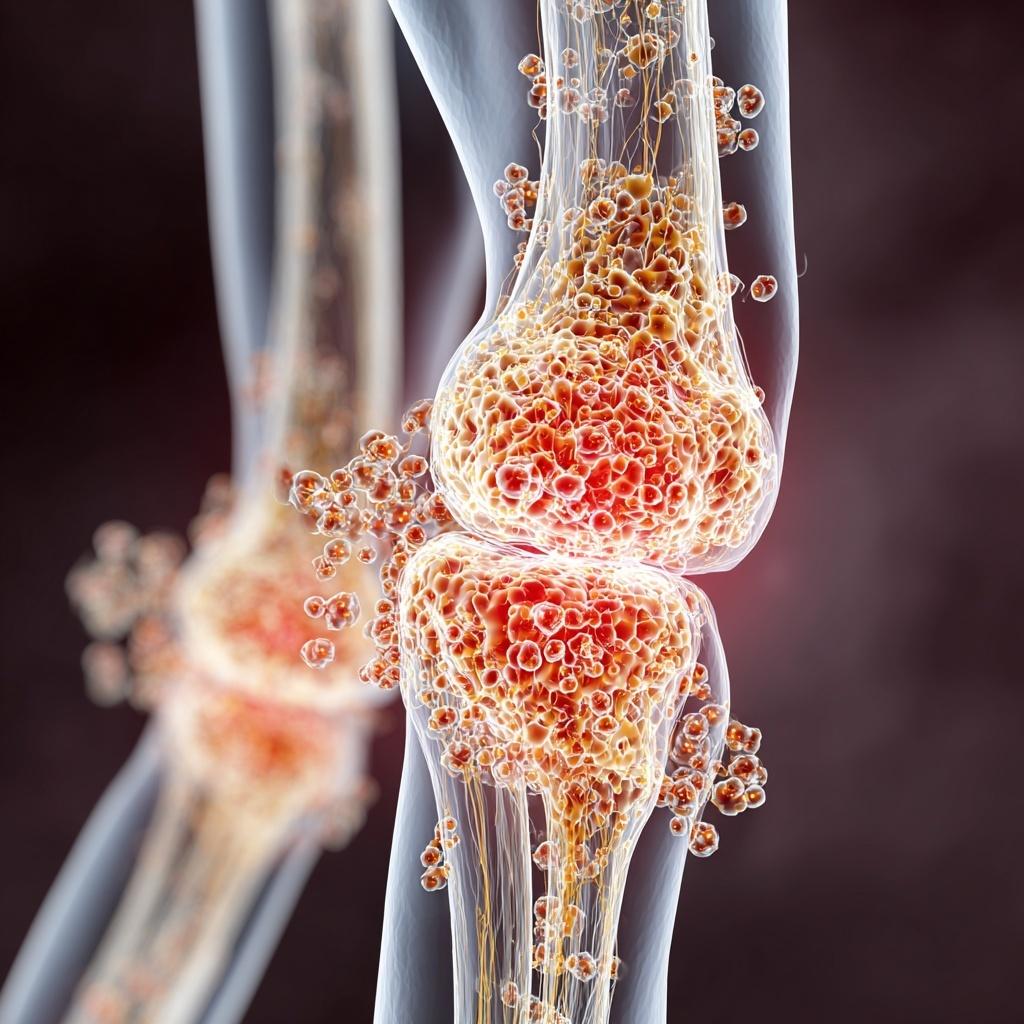
The Bone Remodeling Cycle
Bone is not inert; it is a living tissue that undergoes a continuous process of renewal. This bone remodeling cycle is the key to skeletal health.
The Two Master Cells
The cycle is controlled by two opposing cell types that maintain skeletal equilibrium:
- Osteoclasts: Cells responsible for resorption: breaking down old, microscopic segments of bone tissue and releasing minerals (calcium) into the bloodstream.
- Osteoblasts: Cells responsible for formation: synthesizing and mineralizing new bone matrix to replace the resorbed tissue.
Homeostasis
In a healthy young adult, the activity of osteoclasts and osteoblasts is perfectly balanced (or coupled). The amount of bone removed equals the amount of bone replaced. This is the state of skeletal homeostasis.
The Inflammatory Disruption
Bone micro-inflammation disrupts this homeostasis by acting as an amplifier for the osteoclasts and a silencer for the osteoblasts. The chemical signals bias the entire system toward bone loss.
The Cytokine Storm
The inflammatory signals that hijack the bone remodeling cycle originate from systemic sources, making bone health inseparable from overall metabolic and immune health.
Key Inflammatory Mediators
The low-grade inflammatory state is characterized by the chronic elevation of key cytokines, primarily:
- Tumor Necrosis Factor-alpha (TNF-alpha)
- Interleukin-6 (IL-6)
- Interleukin-1 (IL-1)
The RANK/RANKL/OPG Axis
The cytokine signals directly influence the Receptor Activator of Nuclear factor Kappa-B (RANK) signaling axis, the master switch for osteoclast activity.
- Osteoclast Activation: Inflammatory cytokines (TNF-alpha, IL-6) dramatically increase the expression of RANK Ligand (RANKL) on the surface of osteoblasts and other stromal cells.
- The Go Signal: RANKL binds to the RANK receptor on osteoclast precursors, providing the ultimate “go” signal for their maturation and activation. In bone micro-inflammation, this signal is constantly elevated, leading to a surplus of highly active, bone-resorbing osteoclasts.
Osteoblast Inhibition
Simultaneously, the same inflammatory environment inhibits the creative work of the osteoblasts. Cytokines block key signaling pathways (like the Wnt pathway) that are necessary for osteoblast proliferation and function. This creates an uncoupled state where bone removal vastly outpaces bone formation, leading to net bone loss.
Fat, Gut, and Senescence
The sources of the chronic cytokine load that fuel bone micro-inflammation are frequently metabolic and related to modern lifestyle diseases.
Bone Marrow Adiposity (BMA)
The accumulation of fat cells (adipocytes) within the bone marrow is a major, often overlooked source of bone inflammation.
- Adipokine Release: These marrow fat cells function as an endocrine organ, releasing pro-inflammatory adipokines directly into the bone microenvironment. The increasing accumulation of BMA, seen in obesity, aging, and type 2 diabetes, directly correlates with higher local cytokine levels.
- Stem Cell Competition: High BMA also compromises skeletal health by competing for the shared mesenchymal stem cell pool. Inflammation biases these stem cells toward forming fat cells (adipocytes) instead of bone-forming cells (osteoblasts), exacerbating the formation deficit.
The Gut-Bone Axis
Chronic systemic inflammation often originates in the gut.
- Leaky Gut and LPS: Compromise of the intestinal barrier (Leaky Gut) allows bacterial fragments (LPS) to leak into the circulation, generating low-grade systemic inflammation. The bone tissue detects this chronic inflammation, fueling osteoclast overactivity. This forms a critical part of the gut-bone axis link.
Cellular Senescence
As the body ages, cells become senescent (non-dividing but still metabolically active) and accumulate in tissues, including bone.
- SASP: Senescent cells release a cocktail of pro-inflammatory factors known as the Senescence-Associated Secretory Phenotype (SASP). This localized, age-related inflammation accelerates the aging of the bone microenvironment and contributes significantly to the breakdown phase of bone remodeling.
The Early Consequences
Bone micro-inflammation causes structural damage long before a standard DXA scan can register a loss in Bone Mineral Density (BMD).
Compromised Bone Quality
Bone weakness is not solely about density; it is also about bone quality: the architecture, connectivity, and micro-damage accumulation within the tissue.
- Trabecular Thinning: The excessive osteoclast activity preferentially removes bone tissue from the fine, spongy network of bone plates (trabeculae) found in the spine and the ends of long bones.
- Microarchitectural Breakdown: Inflammation leads to the thinning and eventual disconnection of these trabeculae. The structural integrity of the bone is compromised even if the total mineral content hasn’t dropped enough to register as clinically low BMD. This structural damage significantly elevates fracture risk because the internal scaffolding is brittle and fragmented.
Impaired Fracture Healing
When a fracture occurs, the inflammation-biased environment impairs the healing process.
- Delayed Healing: High local cytokine levels interfere with the complex signaling needed for callus formation and new bone growth. Healing takes longer, and the resulting bone may be weaker and more susceptible to re-fracture, creating a vicious cycle of skeletal fragility.
Targeting the Inflammatory Root
Addressing bone micro-inflammation requires strategies that focus on extinguishing the systemic cytokine fire, rather than just supplementing with calcium.
1. Anti-Inflammatory Lifestyle
The primary intervention is reducing the systemic inflammatory load that fuels the bone breakdown.
- Dietary Modulation: Adopt a diet rich in anti-inflammatory compounds (omega-3 fatty acids, polyphenols) and low in inflammatory triggers (refined sugars, processed seed oils).
- Gut Health: Repairing the intestinal barrier through diet and targeted supplements (like prebiotics and probiotics) reduces the leakage of LPS and dampens the entire gut-bone axis inflammatory signal.
2. Physical and Mechanical Signals
Exercise must be used strategically to send pro-formation signals to the bone.
- High-Impact Loading: Weight-bearing and resistance training provide mechanical stress that directly signals osteoblasts to increase their activity, helping to offset the inflammatory bias toward resorption. However, the inflammation must first be reduced to ensure the mechanical stress promotes building rather than further damage.
3. Hormonal and Metabolic Balance
Controlling chronic stress and metabolic disease is essential for cutting off the source of inflammation.
- Blood Sugar Control: Managing insulin resistance and type 2 diabetes reduces the chronic inflammatory signaling from elevated glucose and the associated fat accumulation (BMA), which directly fuels bone destruction.
Conclusion
Bone micro-inflammation is the silent physiological precursor to bone fragility, operating beneath the radar of standard bone density checks. Driven by a relentless tide of inflammatory cytokines from fat cells and immune system activity, this process severely disrupts the bone remodeling cycle, chronically over-activating osteoclasts while inhibiting osteoblasts. This chemical sabotage leads to an uncoupled state that compromises bone quality and internal microarchitecture long before overt bone loss is diagnosed. Recognizing and extinguishing this low-grade systemic inflammation is the crucial, early step in reversing the tide of skeletal decline and mitigating future fracture risk.