
Pilates and Spinal Recovery
Recovering from a spine-related injury often means rebuilding the body from the inside out. Traditional rehabilitation focuses on mobility, pain reduction, and strengthening isolated muscle groups, but long-term stabilization requires something deeper — coordinated, intelligent movement that restores harmony to the entire musculoskeletal system. This is precisely where Pilates becomes exceptionally effective. Whether practiced on a Pilates reformer, on Pilates reformers used in rehabilitation studios, or simply on a Pilates mat, this method teaches the body to move with precision and awareness. It activates deep stabilizing muscles, corrects alignment, and re-educates movement patterns that protect the spine from recurring injuries.
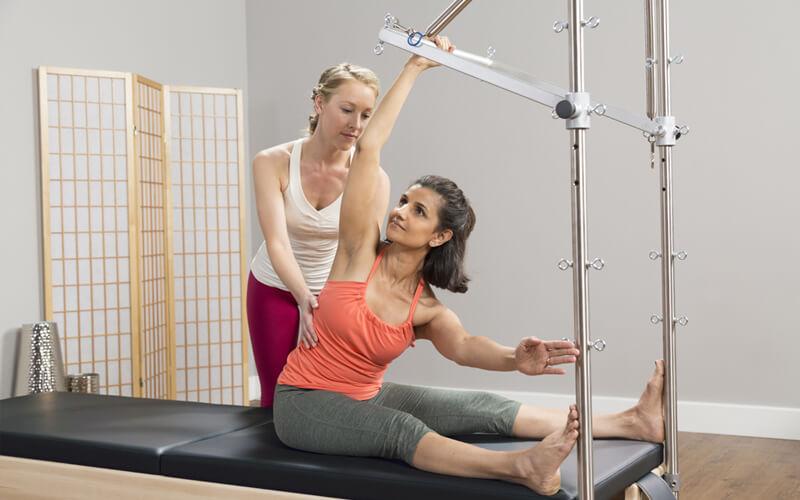
Pilates doesn’t replace medical treatment — it complements it. It bridges the gap between rehabilitation and full physical activity by teaching the spine how to function under safe load. Through slow, controlled movement and conscious breathing, Pilates gradually restores flexibility and stability, helping injured tissues heal while preventing compensations that often lead to chronic pain. The combination of mindfulness, deep core activation, and equipment-supported training makes Pilates one of the most comprehensive systems for rebuilding spinal stability after trauma.
Why the Spine Needs Pilates After Injury?
After an injury, the spine often loses its natural support system. Deep stabilizing muscles such as the transverse abdominis, diaphragm, pelvic floor, and multifidus become inhibited by pain or trauma. In their place, superficial muscles — especially in the neck, lower back, and hip flexors — take over, creating tension, imbalance, and faulty posture. Pilates helps reverse this cycle by reactivating the inner stabilizing system. Through conscious core engagement and isolated yet integrated movements, the spine begins to regain structural balance.
The controlled training performed on a Pilates mat or on equipment like the reformer do pilatesu encourages the spine to move without overload. The springs of the reformer offer adjustable resistance, reducing pressure on the injured segments while allowing safe strengthening. With time, the body learns to distribute forces evenly, so the spine is no longer the main point of stress but part of a coherent, well-coordinated structure. This change forms the basis of long-lasting post-injury stability.
How Pilates Rebuilds Spinal Stability?
Pilates focuses on three pillars essential for spinal recovery: deep-core activation, alignment, and controlled mobility. When performed with precision, each exercise becomes a form of neuromuscular re-education — teaching the brain and muscles how to work together again after an injury. Whether on reformery pilates, using small props, or performing simple mat-based sequences, the method encourages proper sequencing of movement.
Breathing plays a central therapeutic role. Directional rib breathing decompresses the spine, reduces protective muscle tension, and restores natural mobility between vertebrae. This is especially important in people with chronic pain, whose breathing patterns often stiffen the thoracic spine and increase lumbar tension. With regular practice, the breath becomes a stabilizing mechanism — it supports the deep core and allows the spine to move freely without collapsing into harmful compensations.
Most Common Causes of Post-Injury Instability
Spinal instability rarely stems from a single incident. It is usually the result of cumulative tension, weakness, or poor posture that becomes unmasked after an injury. Sedentary lifestyles weaken the posterior chain and core, while long hours of sitting compress the lower spine. Injuries amplify these imbalances — deep stabilizers shut down, the pelvis tilts incorrectly, and the body begins to rely on superficial muscle groups that fatigue quickly. Over time, this leads to recurring pain, stiffness, and reduced range of motion.
Pilates interrupts this cycle by restoring symmetrical movement and eliminating the compensations that make healing difficult. Instead of isolating one muscle group, it strengthens the entire chain supporting the spine. Movements performed slowly and consciously reorganize posture, lengthen tight structures, and encourage the spine to return to its natural, neutral alignment.
Key Exercises Supporting Spinal Stability After Injury
Regular Pilates practice — whether on a Pilates reformer, a reformer pilates setup in a studio, or a mata do pilatesu at home — helps restore balance between tension and release. Below are foundational exercises commonly used in post-injury programs, each engaging deep stabilizers and improving spinal mechanics:
- Imprint & Release – Teaches the connection between breath, pelvis, and deep core activation. Helps reduce lumbar tension and reestablishes safe spinal positioning.
- Shoulder Bridge – Strengthens glutes, hamstrings, and spinal extensors while improving segmental articulation during lifting and lowering.
- Spine Stretch Forward – Enhances thoracic mobility and lengthens the posterior chain without stressing the lumbar spine.
- Cat–Cow – Increases spinal fluidity, reduces stiffness, and improves coordination between pelvis and ribcage.
- Footwork on the reformer – Strengthens hip and leg stabilizers while teaching proper force distribution through the pelvis and spine.
- Short Spine Stretch – A controlled, supported inversion that decompresses the lumbar spine and mobilizes vertebrae.
Each exercise builds structural support from the center outward. With consistent practice, the body becomes more aligned, the spine better supported, and the risk of recurring pain significantly reduced.
Pilates as Therapy and Rehabilitation
Pilates is widely used in orthopedic rehabilitation programs because it adapts to each patient’s capacity and stage of healing. On the reformer do pilatesu, resistance can be modified to allow even severely injured individuals to move without pain. This encourages early reactivation of stabilizing muscles and gradual reintroduction of movement patterns.
What makes Pilates unique in rehabilitation is its holistic approach. Instead of treating the spine as an isolated area, it integrates breathing, pelvic stability, rib placement, shoulder alignment, and limb coordination. The result is not only reduced pain but also improved confidence in movement — something many patients lose after injury.
Long-Term Effects of Pilates on Spinal Recovery
After several weeks of practice, most people experience reduced stiffness, improved mobility, and a stronger sense of postural awareness. Over months, Pilates enhances neuromuscular coordination — the mind and body learn to respond to stress more efficiently, keeping the spine safe during everyday movements. Improved circulation, better breathing, and deeper core strength contribute to long-term spinal health.
Long-term practitioners often report that pain episodes become less frequent and less intense. Their movements feel more fluid, their posture improves naturally, and the spine becomes a stable, reliable structure again.
Who Benefits Most from Post-Injury Pilates?
Pilates benefits almost everyone recovering from spine-related issues — office workers, athletes, drivers, postpartum women, seniors, and individuals after surgery. It provides a safe, gentle yet effective way to return to movement without overloading healing tissues. For beginners, the mata do pilatesu is enough, while those seeking deeper support can progress to sprzęt do pilatesu, such as the reformer, Cadillac, or stability chair.
Elderly individuals benefit from improved balance and reduced fall risk, while people with sedentary jobs gain mobility and relief from chronic tension. The versatility of Pilates makes it one of the most effective tools for long-term spinal care.
This post was created in collaboration with balanced-body.lt