Physical Examination for Abdominal Pain or Stomach Ache: Inspection, Palpation, Auscultation

Physical Examination for Abdominal Pain or Stomach Ache Include Inspection, Palpation and Auscultation

Inspection Of The Abdomen:

Inspection is an observation of abdomen under optimum visualization. Inspection is to evaluate changes in abdominal contour, color and observation of any abnormal vascular changes.

  1. Abdominal Contour: Abdominal shape is often altered with certain disease. Inspection of abdominal curve may show a change of generalized distension or localized bulge.
    • Generalized Distension: Ascites (rounded symmetrical and bulge flank), hematoma – intra abdominal bleeding obesity, bowel distention by gas or liquid.
    • Localized: Portion of the abdomen shows swelling or bulge as in following diseases:
      • Right upper abdomen: Liver tumor, hepatitis.
      • Left upper abdomen: Splenomegaly, gastric tumor.
      • Upper half of the abdomen: Pancreatic cyst or tumor or acute gastric dilatation.
      • Lower half of the abdomen: Pregnancy, ovarian tumor, uterine fibroids, or bladder distention.
      • Scaphoid abdomen: Malnutrition.
    • Flank: Bulge in area of flank is secondary to disease of kidney tumor and kidney abscess.[1]
  2. Discoloration: Bluish discoloration seen with abdominal pain in following diseases:

    Umbilicus (Cullen's sign) and Flanks (Grey Turner's sign) can cause Abdominal Pain or Stomach Ache

    • Umbilicus (Cullen’s sign) – Bluish bruises and edema around umbilicus seen in acute pancreatitis and ectopic pregnancy.[2]
    • Flanks (Grey Turner’s sign)- Bluish bruising of flank seen on pancreatic necrosis, retroperitoneal bleeding and intra-abdominal bleeding.[3]
  3. Striae also known as stretch marks, striae atrophicae, vergetures, striae distensae, striae cutis distensae, striae gravidarum, lineae atrophica and linea albicante. Striae are a scarring of skin by separation of dermal elastic and fibrous tissues, commonly seen after pregnancy and loss of weight in obese patients. Abdomen is stretched considerably in obesity and pregnancy. After pregnancy and loss of weight in obesity stretch marks are very noticeable and detected in abdominal wall
  4. Surgical Scars: In most of the cases, scar is seen as a normal healing scar. In few cases, it may be presented as keloid or infected scar tissue.
  5. Abnormal Abdominal Wall Venous Flow: Changes in direction of venous flow is observed in patients experiencing partial or complete blockade of inferior vena cava by thrombosis or embolism. In a normal individual, blood in venous system of abdominal wall flows from umbilicus outward towards heart in upper half of abdomen and toward feet in lower half of abdominal wall. Blood flow changes direction in inferior vena caval blockage.
  6. Spider nevus of the abdominal wall: Also known as spider angioma and vascular spider. It is presented with central red bright spot of dilated arterioles and radiating branches spreading outward as spider web of venous branches carrying blood away from central arterioles. They are benign and seen in liver disease.
    • Hormonal Contraceptive: Higher estrogen level pregnant woman.
    • Liver Hepatic Disease: Unable to metabolize estrogen, cirrhosis.[4]
  7. Hernia: Bulge is observed in umbilical, epigastric, incisional and spigelian hernia.

Hernia Due To Abdominal Pain or Stomach Ache

Palpation Of The Abdomen:

After inspection, the patient is examined with palm and fingers of one or both hands. Palpation is either gentle superficial and deep or vigorous superficial and deep.

  1. Intra-abdominal Crepitus: Palpation may produce a sound and feel of crepitus. Crepitus is a crackling and popping sound. Intra-abdominal crepitus is observed in necrotizing enterocolitis occurs in premature infants.
  2. Abdominal Tenderness: Tenderness is defined as pain and discomfort when affected area is touched. Generalized tenderness – Peritonitis causes severe generalized abdominal pain and presents other symptoms such as loss of appetite, fever, dehydration, anorexia, poorly localized pain, rigidity, and rebound tenderness.

    Localized:

    • Appendicitis presented with localized tenderness in lower right quadrant of abdomen. Palpation over inflammatory mass such as appendix in right lower quadrant produces severe pain and tenderness.
    • Stomach cancer mass felt in left upper quadrant.[5]
  3. Mass: Diagnosis depends on location where mass is felt. Occasional cases liver, spleen and kidney may be palpable in normal individuals.

    Location:

    • Right Upper Quadrant: Liver hypertrophy, hepatic tumor, carcinoma of head of pancreases, gall bladder enlargement following cholecystitis.
    • Epigastric Mass: Gastric enlargement, pancreatic pseudocyst, pancreatic cancer or abdominal aneurysm.
    • Left Upper Quadrant: Splenomegaly.
    • Flank: Renal cysts, polycystic kidneys, and renal malignancies may all be visible in asthenic patients.
    • Lower Quadrants: Inflammatory or neoplastic disorders of the intestine. In the right lower quadrant appendicular abscess and cecal carcinoma are most likely, while in the left lower quadrant diverticular abscess or carcinoma of the sigmoid colon is most likely.
    • Hypogastric Quadrant: Pain cause by pelvic organs.

    Consistency:

    • Soft: Ovarian cyst, volvulus, bladder distention, cholecystitis.
    • Firm: Splenomegaly, neuroblastoma, kidney cancer, aortic aneurysm, bowel obstruction.
    • Hard: Uterine leiomyoma, stomach ulcer, hepatomegaly, liver cancer, kidney cancer, colon cancer, gallbladder tumor.
  4. Guarding: Peritonitis, appendicitis, diverticulitis, rupture ovarian cyst, twisted ovarian cyst, rupture aortic aneurysm, spleen rupture, uterus rupture, mesenteric embolism, pancreatitis, intestinal obstruction, ectopic pregnancy, rupture gallbladder, perforated ulcer, volvulus, intussusception, abdominal injury.
  5. Rigidity: Peritonitis, appendicitis, diverticulitis, rupture ovarian cyst, twisted ovarian cyst, rupture aortic aneurysm, spleen rupture, uterus rupture, mesenteric embolism, pancreatitis, intestinal obstruction, ectopic pregnancy, rupture gallbladder, perforated ulcer, volvulus, intussusception and abdominal injury.
  6. Rebound Tenderness (Rovsing’s sign): Tenderness and rebound tenderness on palpation. This is seen in appendicitis, peritonitis and ulcerative colitis.[6]

Auscultation Of The Abdomen:

Physical Examination for Abdominal Pain or Stomach Ache: Auscultation Of The Abdomen

  • Normal Peristalsis: Normal peristalsis of the intestine produces bowel sounds as gas and fluid are passed through the intestinal lumen. Normally, the bowel sounds are intermittent, low-pitched, chuckling sounds. Bowel sounds may be decreased or increased in few diseases.
  • Absence of Bowel Sound (paralytic ileus): Late stage of intestinal obstruction, paralytic ileus seen in congestive heart failure, pneumonia and uremia.
  • Hyperactive Peristalsis(rushes): High pitch and tinkling sound, earlier phase of intestinal obstruction.
  • Rubs: Irritation of inflamed serosa surface of peritoneum rubbing against diseased organs during inspiration and expiration of breathing cycle e.g. liver, spleen and abdominal mass. Normal peritoneal surface when inflamed from infection or neoplasm causes adherence to vascular structure and surrounding organ.
  • Vascular Bruits: Audible turbulent blood flow conducting swishing sound over major arteries during systole. Observed in aortic aneurysm and atherosclerosis of aorta and renal artery. Occasional bruits are heard during systole and diastole in a patient suffering with arteriovenous communications.
  • Crepitus: Sound is produced by friction between gas and fluid within the viscous of organ or air entrapped in subcutaneous tissue following infection such as gas gangrene. Penetrating chest wall injury can cause subcutaneous emphysema secondary to air leaking from alveoli into subcutaneous tissue through a track of air fistula. Post surgery claustredial infection can cause intra-abdominal gas gangrene.

Medical Emergency:

Physical Examination for Abdominal Pain or Stomach Ache: Medical Emergency

  • Vomiting: Persistent and continuous vomiting causes dehydration.
  • Diarrhea: Continuous several episodes causing dehydration.
  • Profuse hemoptysis: Peptic perforation, gastric bleeding tumor. Bleeding per rectum- hemorrhoids, tumor.
  • Bleeding Abdomen: Ruptured aneurysm.
  • Peritonitis caused by Perforation of Abdominal Organs. Ulcer from esophagus, stomach, intestine and large bowel can perforate and cause peritonitis. Gastric carcinoma, intestinal tumor, inflamed appendix, Meckel’s diverticulitis or intestinal infarction can cause perforation and severe peritonitis. Rare causes of peritonitis are ingestion of foreign bodies and abdominal surgery. Auto or work injury may cause blunt or penetrating abdominal trauma causing injury to internal organ and tear. Peritonitis is cause by feces in the peritoneal cavity inducing E.Coli and anaerobic bacterial (bacteroides fragilis) infection. Surgical trauma or injury causes peritonitis mostly infected by staphylococcus aureus or coagulase negative staphylococci and may include fungi and Candida.
  • Non-infected Peritonitis: Sterile fluid from body if leaked into peritoneal cavity causes inflammatory reaction. Non-infected peritonitis is observed with leakage of blood, endometriosis, gastric juice, urine, menstruum, pancreatic juice or ovarian cyst rupture.[7]

References:

Also Read:

Symptoms of Abdominal Pain or Stomach Ache

Symptoms of Abdominal Pain or Stomach Ache Include

1. Chronic Abdominal Pain:

  1. Sudden and Severe Pain– is caused by perforation, mesenteric ischemia, intestinal obstruction, biliary colic, black widow spider bite, and poisoning.
  2. Sluggish and Severe Pain– is caused pancreatitis (upper abdomen and upper back).
  3. Duration of pain is either brief or prolonged.
    1. Brief pain is observed when pain is caused by gas in bowel, food poisoning.
    2. Prolonged abdominal pain is caused by gallstone, pancreatitis and cancer of abdominal organs.
  4. Abdominal Cramps– cramps are waves of abdominal pain due to contractions of the intestinal muscles and distention of the intestine.
    1. Less than 24 hours: Gas, constipation.
    2. More than 24 hours: Associated with diarrhea and fever, e.g. stomach flu, infection, food poisoning, ulcer, obstruction, volvulus and intussusception.
  5. Stabbing PainStabbing pain is caused by food poising, irritable bowel syndrome, peptic ulcer, appendicitis, diverticulitis, psoas abscess, intussception, menstruation and peritonitis.
  6. Twisting Pain– Twisting pain is caused by miscarriage, Crohn’s disease, ulcerative colitis, stomach flu, indigestion, food poisoning, infection in the uterus or fallopian tubes, pelvic inflammatory disease (PID), cystitis, stomach cancer, pancreatic cancer and mesenteric ischemia.
  7. Piercing:

    Abdominal Pain or Stomach Ache Due to kidney stones

    Piercing pain is caused by appendicitis, divericulitis, perforated ulcer, peritonitis, ectopic pregnancy, gallstones or other gallbladder infection, kidney stones, Crohn’s disease, ulcerative colitis, rupture ovarian cyst, disease of ovaries, pelvic inflammatory disease (PID), kidney or ureter stones, infection in the urinary tract, cystitis, stomach cancer and pancreatic cancer.

  8. Referred Pain: Pain is referred to various sites over body. Pain is called referred pain when observed at distant region.
    1. Shoulder: Rare but occasional from disease of liver, gall bladder, stomach, spleen, lungs, or pericardial sac.
    2. Groin: Intra-abdominal causes of pain rarely referred to groin. Kidney stone and testicular torsion can cause groin pain.
    3. Buttocks: Colon cancer, urethral stone and abdominal aneurysm.[1]

Chronic Abdominal Pain

2. Visceral Pain

          1. Upper Middle Abdominal Pain (Epigastric):

            Epigastric pain is caused by gastritis, stomach ulcer, stomach cancer, pyloric stenosis, hiatal hernia, esophageal regurgitation and pancreatitis.

          2. Upper Right Abdominal Pain (Right Hypochondriac):

            Right hypochondriac pain is seen in patients suffering with liver diseases like hepatomegaly, fatty liver, hepatitis, liver cancer, liver abscess and liver hemangioma. Right hypochondriac pain is also observed in patients suffering with cholangitis, cholecystitis, roundworms, gallstones and gallbladder cancer. Other causes of right hypochondriac pain are bowel obstruction, intestinal spasm, colon cancer.

          3. Upper Left Abdominal Pain (Left Hypochondriac):

            Left hypochondriac pain is observed in patient suffering with splenomegaly, spleen infection, splenic abscess, pancreatitis, pancreatic cancer, Bowel obstruction, functional disorder, gas accumulation, spasm, inflammation and colon cancer.

          4. Middle Abdominal Pain (Umbilical Pain): 
            Umbilical pain is often seen in patients with history of appendicitis, intestinal spasm, obstruction, perforation and injury. Metabolic disorders like diabetic ketoacidosis and uremia may cause umbilical pain. Mesenteric thrombosis (blood clot in mesenteric vein) also causes severe umbilical pain.

          5. Lower Right Abdominal Pain (Right Iliac):
            Right iliac pain is more common then left iliac pain. Pain is caused by bowel distension, constipation and perforation. Other causes are appendicitis, carcinoma of appendix and impacted stool in cecum. Less common causes of pain in right iliac area are cholecystitis, carcinoma of gall bladder, bladder cystitis, bladder stone, bladder cancer, cancer of uterus, vagina, ovaries, fallopian tube and ectopic pregnancy. Right iliac pain may be secondary to endometriosis, Mittelschmerz (pain associated with ovulation), salphingitis (inflammation of fallopian tube), tubo-ovarian abscess, Crohn’s disease, ulcerative colitis and inguinal hernia.
          6. Lower Left Abdominal Pain (Left Iliac):

            Left iliac pain is caused by intestinal polyp, sigmoid volvulus, obstruction, gas accumulation, urinary bladder cystitis, bladder stone, and bladder cancer.

            Diseases of genital organs such ectopic pregnancy, endometriosis, Mittelschmerz (pain associated with ovulation), salphingitis (inflammation of fallopian tube) and tubo-ovarian abscess also causes severe left iliac pain.

          7. Hypogastric:

            Hypogastic pain is above the pelvic bone and lower part of abdomen. Pain is caused by diseases of urinary bladder, uterus and sigmoid colon.[2,3]

      3. Symptoms associated with Abdominal Pain

      1. Abdominal Distension:

        Abdominal Pain or Stomach Ache Due to Abdominal Distension

        Abdominal distension is an enlargement of abdominal content or sensation of elevated abdominal pressure and volume. Causes of abdominal distension are as follows: Celiac disease, tropical sprue, gastroenteritis, giardiasis, worm infection, Whipple disease, ascites, diverticulitis, kidney stone, lactose intolerance, bowel obstruction, pregnancy, premenstrual syndrome and ovarian cancer.[4]

      2. Fever:

        Infection, ulcerative colitis, Crohn’s disease, gastroenteritis, appendicitis, gall bladder problems, intestinal ischemia, diverticulitis, food poisoning, ulcerative colitis and infection.

      3. Diarrhea:

        Diarrhea is caused by viral or bacterial infection of stomach or small bowel. Parasite infections like amebiasis, giardiasis and worm infection also causes severe diarrhea. Other causes of diarrhea are food allergy, food intolerance, celiac disease, lactose intolerance, fructose intolerance, pernicious anemia, cystic fibrosis, pancreatitis, short bowel syndrome and chemotherapy. Ulcerative colitis, Crohn’s disease and Irritable bowel syndrome are also few of the common causes of diarrhea.

      4. Constipation:

        Constipation is one of the common diseases associated with abdominal pain. Constipation is defined as an infrequent bowel movement and during the act of defecation; stool may or may not pass. Constipation may be secondary to insufficient fiber and fluid intake. Causes of constipation, which may need further investigations are colorectal carcinoma causing partial obstruction, hypercalcemia, hypothyroidism, diabetes mellitus and cystic fibrosis.

      5. Hematemesis:

        Hematemesis is a vomiting or spitting of blood. It is observed in disease such as gastric ulcer, esophagitis, esophageal varices, esophageal ulcer, esophageal cancer and stomach cancer.[5]

      6. Rectal Frank or Occult Bleeding:

        Rectal bleeding is lower gastrointestinal bleeding cause by gastrointestinal diseases such as colon cancer, colitis, ulcer, ischemia and hemorrhoids.[6]

      7. Skin Rash:

        Associated with severe pain secondary to post herpetic neuralgia or shingles.

      8. Inability to Urinate:

        Urinary retention or inability to pass urine is sometimes associated with abdominal pain. Urinary retention is obstructive or neurogenic in origin. Causes of inability to urinate in male are enlarged prostate, carcinoma prostate, bladder stone and urethral stone. Causes of retention in male and females are tumor, infection, stricture of urethra, blood clot and stones. Patients suffering with neurogenic bladder, spinal cord stenosis, spinal cord tumor, diabetes mellitus and herniated disk also may suffer with inability to urinate.

      9. Vaginal Bleeding:

        Vaginal bleeding is considered normal in menstruation unless bleeding is profuse and considered abnormal in quantity. Regular monthly vaginal bleeding is called menstruation and irregular vaginal bleeding is called metrorrhagia. Term metro-menorrhagia is use to indicate normal regular menstrual bleeding associated with irregular vaginal bleeding. Vaginal bleeding may originate from uterus, cervix or vagina. Vaginal bleeding is seen in ovaries, fallopian tube, vagina, uterus cervix, ectopic pregnancy and miscarriage.[7]

      References:

Also Read:

Pathophysiology of Abdominal Pain or Stomach Ache

Pathophysiology of Abdominal Pain or Stomach Ache Include

Inflammation: Pain at times is severe and continuous and caused by appendicitis, diverticulitis and colitis.

Ulcer: Ulcer is most common in stomach and duodenum. Ulcer causes severe pain, often mostly after food intake. Ulcer pain responds to antacids.

Obstruction: Bowel obstruction causes distention of intestine or large bowel, stretching of intestinal or bowel external wall generate severe sharp and squeezing pain.

Hepatoma Can Cause Abdominal Pain or Stomach Ache

Enlarged Organ: Hepatoma, splenomegaly stretches the organ and the peritoneal covering causing severe pain.[1]

Ischemic Pain: Lack of blood supply or ischemia of intraabdominal organ can cause severe pain as seen in ischemic bowel disease or embolism of mesenteric blood vessels.[2]

References:

Also Read:

What are the Causes of Abdominal Pain?

Abdominal Pain is a very common complaint and can be observed in many medical conditions. Pain in abdomen can be commonly experienced by people of all ages and can affect both the genders equally. Causes of abdominal pain can be many and the complaint of abdominal pain can be a part of many medical disorders. In fact, abdominal pain is simply a symptom, and causes of abdominal pain usually depend on the underlying medical condition.

What are the Causes of Abdominal Pain?

Here are some of the common causes of abdominal pain.

Common Conditions That Can Cause Abdominal Pain

Causes of abdominal pain may be related to the commonest conditions that people experience very often. For example-

Abdominal Pain Caused Due to Indigestion1– Overeating, improper digestion or changes in regular dietary habits can often cause abdominal pain. It may sometimes be associated with abdominal bloating and feeling of fullness, which may be relieved by having light meals and allowing the digestive system to rest. Abdominal pain, caused by indigestion and dietary disturbances may also be a result of eating outside food, consumption of certain food substances which are difficult to digest or which the body may not tolerate well.

Abdominal Pain Caused Due to Food Allergies – People having food allergiesmay face trouble on consumption of those foods, resulting in abdominal pain, cramping, bloating, nausea, vomiting or loose motions. Abdominal pain is a common occurrence with intake of allergy causing food substances like sea foods, milk products, dairy, peanuts, certain vegetables and lentils. It is important to identify such substances and avoid them in the diet to prevent abdominal pain from food allergies. Food allergy causes infiltration of eosinophils in gastrointestinal tract.

Milk Intolerance – Milk intolerance is another common cause of abdominal pain, resulting in vomiting, improper digestion of milk and pain in abdomen. This occurs due to the lack of ability to digest the sugar (lactose) present in milk and the result is gastric disturbance and abdominal pain.

Gastric Infections That Can Cause Abdominal Pain

Gastric & Intestinal Infections That Can Cause Abdominal Pain

Contaminated food and water is commonly the main cause of gastric infections causing abdominal pain. Most infections and digestive problems related to food and water contaminated with bacteria, viruses and other organisms, result in conditions that cause abdominal pain. These include-

Viral Infections – Viral infections are a common cause of abdominal pain. Viral infections commonly occur during change of weather and usually present with flu-like symptoms. Common cold, cough, fever, stomach ache or abdominal pain, which may be associated with bloating, nausea, vomiting and bowel changes. While some viral infections clear off on their own, after running their natural course, some may need medical treatment. It is advisable to seek medical opinion and follow the treatment.

Food Poisoning – Food poisoning, often a medical emergency, can be an important cause of abdominal pain. It results from consumption of food contaminated with disease causing organisms, commonly found in street food or leftover and stale food. In this case, abdominal pain is often accompanied with vomiting, diarrhea and gastric disturbances. It is better to get the case evaluated immediately and take the necessary medical treatment.

Gastroenteritis – Gastroenteritis, commonly occurring due to bacterial or sometimes viral agents, can be a common cause of abdominal pain. This conditions usually results from poor hygiene and affects the gastric system, by causing inflammation in the stomach and intestines. This leads to excessive gas formation, vomiting and loose motions with crampy abdominal pain. It requires appropriate medical treatment and oral or intravenous rehydration to maintain body fluids.

Typhoid3– Typhoid fever or enteric fever is an infection caused by a bacteria called Salmonella typhi. Typhoid spreads through contaminated food or water and causes fever, headache, abdominal pain and gastric upset. Typhoid is also one of the common causes of abdominal pain. Diagnosis of typhoid is based on clinical examination and laboratory tests, which also include detecting the presence of the causative organism. It is treated with antibiotics and other medications depending on the condition.

Hepatitis4– Hepatitis is a viral infection, mainly affecting the liver and can cause abdominal pain. This is usually contracted through contaminated food and water, but has other modes of transmission too, depending on the type of hepatitis like hepatitis A, B, C, D and E. There are non-viral types of hepatitis like those caused due to alcohol or due an autoimmune disease. As the liver is involved in the function of clearing off toxins from the body, inflammation of the liver in hepatitis can cause disturbance in the digestive function. It presents with nausea, vomiting, abdominal pain, may be more on the right side, loss of appetite and weight loss. All types of hepatitis are causes of abdominal pain. The characteristic feature of hepatitis is jaundice or yellowish discoloration of the skin, eyes, which can be noted on the sclera or the white part of the eyes. Diagnosis is often made by physical examination, investigations like liver enzyme tests and imaging studies of liver, which may reveal elevated levels and swelling or enlargement of the liver. Viral antibody testing may be done to detect the specific type of hepatitis. Treatment depends on the type and the infection can be prevented by avoiding contaminated food and water and maintaining food and personal hygiene. Vaccines are also available to prevent certain types of hepatitis.

Giardiasis – Giardiasis is a parasitic infection, mainly affecting the small intestine. It usually spreads through contaminated water, drink and sometimes food, coming in contact with infected person and also through pets. It presents with nausea, vomiting, diarrhea, abdominal pain, bloating and cramps. It may also be accompanied with gas formation, headache and loss of appetite.

Most gastric infections present with abdominal pain and show gastric symptoms. The precise way to diagnose the condition is to get a stool examination done, which often reveals the organism responsible for causing the infection and pain in the abdomen. For some conditions, additional investigations like imaging studies or visualization of a particular area in endoscopy maybe done, if found appropriate. Treatment is based on the cause, infective organism and other findings in the investigations. Gastric infections can be prevented by maintaining proper personal and community hygiene, practicing proper hand washing techniques and implementing appropriate food handling measures.

Gastric and Intestinal Conditions That Can Cause Abdominal Pain

Constipation – Constipation is a very common cause of abdominal pain and can affect adults as well as children. Straining to pass stools, hard stools and painful passage of stools in constipation can cause pain and discomfort in the anal region and abdominal pain. This is often treated with laxatives, but proper diet, exercise and lifestyle changes can help to a great extent, however, medical advice should be followed. Any other underlying conditions causing constipation and abdominal pain must be ruled out.

Gastroesophageal Reflux Disease (GERD) – Conditions resulting in hyperacidity and reflux disease often cause abdominal pain. The acid or digestive juices in the stomach get refluxed reaching to the esophagus, which often causes burning pain in stomach and esophagus, felt under the breastbone. This is accompanied by irritation in throat, nausea, abdominal pain and sometimes even vomiting. Diagnosis can be made with proper history, imaging studies and endoscopy. This condition needs to be treated with appropriate antacids, antibiotics and other medicines that improve digestion.

Peptic Ulcers – Peptic ulcers, which include gastric and duodenal ulcers often cause abdominal pain. The location and type of abdominal pain in peptic ulcers may be different from that in other causes of abdominal pain. Peptic ulcers may cause burning type of pain, the location may be specific that can be pointed with a finger in the region of stomach, on the left side or around the duodenum, on the right side of the umbilicus. The abdominal pain caused by peptic ulcer can be associated with nausea, vomiting, regurgitation of food, burning in throat and burning pain under the breastbone. The pain is related to food intake and is usually felt on empty stomach or after eating food and there are specific triggers too. Peptic ulcers are treated with antacids, antibiotics and changes in dietary habits may be suggested.

Diverticulitis – Diverticulitis is the inflammation of the pouches formed in the wall of the colon, which leads to abdominal pain, may be more on the left side. It can be caused by an infection or a low fiber diet may add to the problems. Diverticulitis can cause abdominal pain, which may be aggravated on movement and may be accompanied with indigestion, feeling of fullness, abdominal bloating and changes in bowel, constipation or diarrhea. The condition can be diagnosed with the help of personal history, blood tests to check for infection or abdominal scans to detect the structural changes and inflammation causing abdominal pain.

Appendicitis – Appendicitis is a condition, resulting from inflammation of the appendix, which can cause abdominal pain. It is often caused by accumulation of feces due to constipation, injury, tumors or conditions causing obstruction in the area. The condition can be chronic in nature or can be acute, which may require immediate medical attention. Abdominal pain is accompanied with nausea, vomiting, constipation or diarrhea, difficulty in passing stools, swelling in abdomen and sometimes even fever.

Appendicitis can be diagnosed with imaging studies, X-rays and CT scans, which can also help to rule out other possible conditions with similar complaints. Treatment usually depends on the severity of the condition, abdominal pain and associated complications. Antibiotics to treat infection, drainage of abscess or surgical removal of appendix (appendectomy) may be considered as appropriate.

Pancreatitis – Pancreatitis is inflammation of the pancreas, which maybe of acute or chronic type. Pancreatitis can cause abdominal pain, more in the middle and towards the left in the abdomen. It is associated with abdominal bloating, nausea, vomiting and other gastric symptoms. There are several complications of pancreatitis, which may appear if timely treatment is not done. Treatment involves medications to relieve inflammation, surgery, special diet and other specific treatment depending on the severity of the condition.

Inflammatory Bowel Disease – Inflammatory bowel disease, which includes Crohn’s disease and ulcerative colitis is a common cause of abdominal pain. It also involves passing loose motions, fatigue, weight loss and inability to digest food effectively, resulting in abdominal pain and discomfort. Ulcerative colitis causes ulcers in large intestine and rectal lining, while Crohn’s disease results in inflammation of the lining of the intestines, both of these conditions can cause considerable abdominal pain. The condition is diagnosed with the help of colonoscopy and other specialized endoscopies. Treatment of abdominal pain caused due to IBD includes anti-inflammatory medicines, antibiotics, steroids or immunosuppressant medicines depending on the cause, type and severity.

Irritable Bowel Syndrome – This condition is very common and affects the digestive system at the functional level but usually does not cause damage to the inner lining of the intestines. Irritable bowel syndrome causes crampy abdominal pain, changes in bowel patterns, difficult digestion. It may also be associated with other symptoms like headache, irritability, disturbed sleep, body pain, etc.

Gall Bladder Conditions – Gall bladder conditions, those that cause inflammation (cholecystitis) and those, which can get triggered like gall stones (cholelithiasis) can cause severe abdominal pain. Gall bladder related abdominal pain is felt more in the right upper part of the abdomen and under the ribs. It is associated with nausea, vomiting, fever, chills and jaundice. An episodic pain may subside but if the condition is severe, surgical removal of gall bladder (cholecystectomy) may be considered.

Other Causes of Abdominal Pain – Along with the commonest causes of abdominal pain, almost any condition affecting the digestive system, can cause abdominal pain. Some of the other conditions causing abdominal pain include worms, hernia, peritonitis, intussusception, intestinal obstruction, etc.

Other Medical Conditions That Can Cause Abdominal Pain

It is common for gastric causes to result in abdominal pain, however, there are other conditions that can cause abdominal pain. These include-

Kidney Related Causes of Abdominal Pain – Kidney related conditions like urinary tract infections, renal stones and other conditions can cause pain in the back often also extending in the front resulting in abdominal pain. Such pain in abdomen due to renal causes often presents with other renal symptoms like pain when urinating, burning urination, increased or decreased urination.

Muscular Causes – Muscular causes, muscular rigidity or spasms, too can cause abdominal pain.

Gynecological Reasons for Abdominal Pain – Women may experience abdominal pain during their menstrual cycle. Menstrual pain or dysmenorrhea, pain during ovulation, pregnancy, ectopic pregnancy or gynecological conditions like endometriosis, pelvic inflammatory disease or infections can cause abdominal pain.

Others – Other conditions affecting other areas like pneumonia, pulmonary infarction, pleurisy, pericarditis, etc. can cause abdominal pain. Problems with related organs like conditions affecting the prostate gland, diabetic ketoacidosis, aortic aneurysms can cause abdominal pain. Injury in or around the abdomen, uremia, sickle cell anemia, etc. too can cause abdominal pain. Tumors, certain types of cancers or diseases spreading to the abdominal areas can also cause abdominal pain.

The Following Could Also Cause Abdominal Pain or Stomach Ache

  1. Trauma- Stomach, bowel, spleen, liver and kidney.
    • Blunt.
    • Perforating.
  2. Inflammatory- Appendicitis, cholecystitis, pancreatitis, pyelonephritis, pelvic inflammatory disease, hepatitis, mesenteric adenitis, subdiaphragmatic abscess.
  3. Perforation of Gut- Peptic ulcer, diverticulum, appendix, caecum.

    Appendix can cause Abdominal Pain or Stomach Ache

  4. Complications- Crohn’s disease, ulcerative colitis.
  5. Mechanical- Small bowel obstruction, colorectal cancer, inflammatory bowel disease, volvulus, fecal impaction, hernia.
  6. Vascular- Occlusive intestinal ischemia.

When Should I Consult A Doctor?

One should see a physician or visit ER physician when abdominal pain lasts for 8 to 12 hours and pain does not respond to over the counter medication. Most symptoms caused by food poisoning or food allergies subside after 8 to 12 hours. If the abdominal pain, nausea, vomiting and diarrhea continues after 12 hours then it is important to find out the cause of abdominal pain. The conditions like perforation of ulcer, intestinal obstruction and abdominal bleeding can cause further complication or turn into life threatening condition because of severe bleeding. Such condition may need emergency surgery.

References-

  1. Food and functional dyspepsia- a systematic review.

    Duncanson KR1, Talley NJ1, Walker MM1, Burrows TL1., J Hum Nutr Diet. 2018 Jun;31(3)-390-407.

  2. Eosinophilic Gastrointestinal Disorders.

    Gonsalves N1., Clin Rev Allergy Immunol. 2019 Mar 22.

  3. Enteric fever imported to the Czech Republic- epidemiology, clinical characteristics and antimicrobial susceptibility.

    Trojánek M1, Dědičová D, Žemličková H, Jakubů V, Malíková E, Reisingerová M, Gabrielová A, Papagiannitsis CC, Hrabák J, Horová B, Urbášková P, Marešová V, Stejskal F., Folia Microbiol (Praha). 2015 May;60(3)-217-24.

  4. Quality of life in adolescents with hepatitis C treated with sofosbuvir and ribavirin.

    Younossi ZM1,2, Stepanova M3, Schwarz KB4, Wirth S5, Rosenthal P6, Gonzalez-Peralta R7, Murray K8, Henry L3, Hunt S3., J Viral Hepat. 2018 Apr;25(4)-354-362.

  5. Clinical and diagnostic features and treatment of giardiasis.

    Begaydorova RKh, Nasakaeva GE, Tabagari SI, Iukhnevich EA, Alshinbekova GK., Georgian Med News. 2014 Nov;(236)-55-61.

Also Read:

Types of Abdominal Pain or Stomach Ache Based on Organ Systems

Classification or Types of Abdominal Pain Based on Organ Systems

Abdominal Pain or Stomach Ache is classified by origin of pain from different organ systems.[1]

Types of Abdominal Pain or Stomach Ache

1. Gastrointestinal System

2. Bile System:

3. Liver:

4. Pancreatic:

  • Inflammatory: Pancreatitis.
  • Cancer: Pancreatic Tumor.[3]

5. Renal and Urological:

  • Inflammation: Pyelonephritis and Bladder Infection.
  • Obstruction: Kidney Stone, Urolithiasis, Ureter Stone, Bladder Stone, and Tumors.
  • Vascular: Left Renal Vein Entrapment.[4]

6. Gynecological or Obstetric:

Ectopic Pregnancy Can Cause Abdominal Pain

  • Inflammatory: Pelvic Inflammatory Disease.
  • Mechanical: Ovarian Torsion.
  • Endocrinological: Menstruation, Mittelschmerz.
  • Tumors: Endometriosis, Fibroids, Ovarian Cyst, Ovarian Cancer.
  • Pregnancy: Ruptured Ectopic Pregnancy, Threatened Abortion.[5]

7. Referred Pain:

  • Thorax: Pneumonia, Pulmonary Embolism, Ischemic Heart Disease, and Pericarditis.
  • Spine: Radiculopathy.
  • Genitals: Testicular Torsion.

8. Metabolic Disturbances:

9. Blood Vessels: Abdominal Aortic Aneurysm.

10. Immune Systems:

11. Idiopathic: Irritable Bowel Syndrome.

References:

Also Read:

Abdominal Pain: What Can Cause Pain in the Stomach?

What is Abdominal Pain or Stomach Ache?

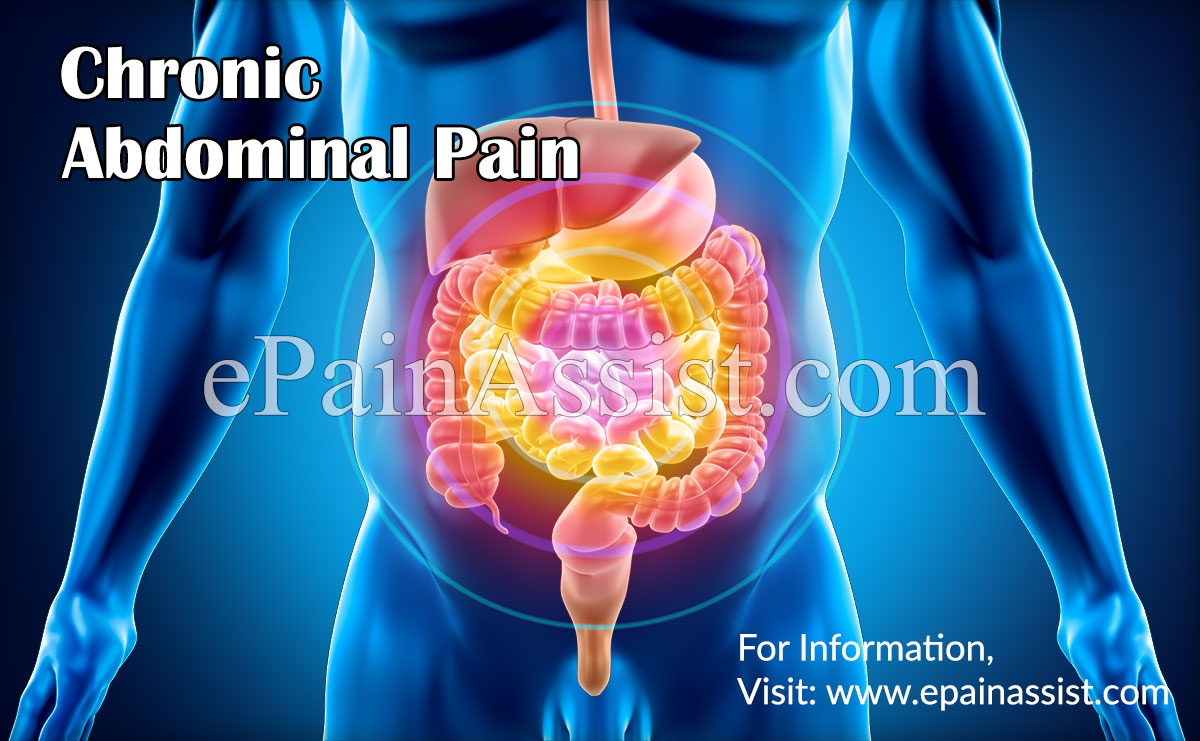
Intra-abdominal pain is also known as stomach pain, stomachache, bellyache and abdominal cramps. Abdominal pain can be from abdominal wall or intra-abdominal organs.[1]

Intra-abdominal pain is not an abdominal wall pain. The abdomen is the section of body between chest and pelvis.[2] Intensity of intra-abdominal pain is mild to severe and duration can be short (acute) or long (chronic). Some intra-abdominal pain may be present for days, weeks or months. Intra-abdominal pain is often secondary to irritation of mucosal membrane causing inflammation such as gastritis or erosion of mucosal membrane causing ulcer. Pain may be secondary to spasm of intestine from large volume of gas, obstruction or constipation.[3] Acute and severe intra-abdominal pain secondary to perforation may need immediate medical attention. Perforation of stomach or intestine is preferably diagnosed and treated sooner to prevent life threatening peritonitis and septicemia.

Intra-abdominal organs initiating pain are stomach, small intestine, colon, liver, gallbladder, spleen, kidney, and pancreas. Occasional pain may be referred from chest initiated in lungs or bronchi. Other referred pains are from pelvic organs such as uterus, ovaries and vagina. Some of the pains generated in abdominal organs such as pain from pancreatitis or originating from kidney are referred to back and flank.

Abdominal Pain

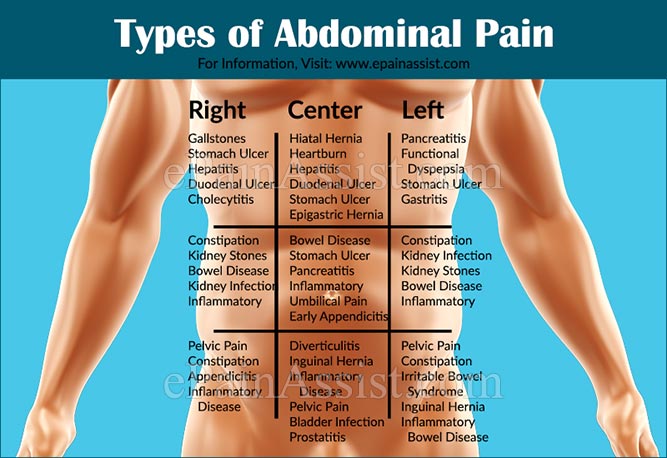
Surface anatomy of the abdomen divides abdomen into 9 quadrants or regions.[2,5]

  • Top three are called left hypochondriac, epigastric and right hypochondriac.
  • Middle three quadrants are known as left lumbar, middle section umbilical and right lumbar quadrant.
  • Bottom three quadrants are left iliac, hypogastric in the middle and right iliac.

References:

Neck Pain or Cervicalgia: Types, Causes, Pathophysiology, Symptoms, Treatment, Exercises, Tests

What is Neck Pain or Cervicalgia?

Many of us have experienced severe Neck Pain or Cervicalgia at some point in our lives. It can be caused due to a variety of reasons such as not sleeping in a correct position, being in an accident leading to whiplash injury or twisting the neck during strenuous physical activity.[1] Severe neck pain can also lead to headaches or dizziness. Symptoms may resolve in a few days or there may be persistent pain that limits everyday activities. (Read About :”You May Qualify for Disability Benefits for Neck Pain“)

The cervical spine is a very intricate and flexible structure with the capability to support a head weighing 15 or more pounds while moving in several directions. Cervical spine has the maximum freedom of movement when compared to other parts of the spine. Cervical spine is capable of moving the head in many directions like 90 degrees of flexion (forward motion), 90 degrees of extension (backward motion), 180 degrees of rotation (side to side), and almost 120 degrees of tilt to either shoulder.[2] Due to this combination of complexity and flexibility, the neck, or the cervical spine region, is more prone to pain and injury. Cervical spine is composed of 7 small vertebrae along with intervertebral discs to absorb shock, joints, the spinal cord, 8 nerve roots, vascular elements, 32 muscles, and ligaments. The nerve roots start from the spinal cord like tree branches through vertebral foramen. Each nerve root transmits nerve impulses or signals to and from the brain, shoulders, arms, and chest. A combination of 4 arteries and veins comprise of the vascular system that run through the neck to circulate blood between the brain and the heart. Joints, muscles, and ligaments enable movement and aid in stabilizing the cervical spine structure.

Neck Pain or Cervicalgia

Classification and Types of Neck Pain or Cervicalgia

  1. Acute Neck Pain or Cervicalgia:

    This is severe pain in the neck with stabbing, shooting pain referred into the shoulders and arms. Patients having the following symptoms should seek medical attention immediately: Progressive neurological deficit such as weakness in the arms or loss of feeling and coordination in the arms or legs may indicate nerve damage. Persistent or increasing pain accompanied by lack of appetite, unplanned weight loss, nausea and vomiting with fever/chills/shakes could be an indication of spinal tumor or infection.

  2. Chronic Neck Pain or Cervicalgia:

    Chronic neck pain is prolonged pain present for a long duration of time. It is accompanied by pain that radiates down the arms, and into the hands and fingers. Cervical herniated disc or foraminal stenosis pinching a nerve in the neck is the common cause. Treatment for cervical disc herniation depends on the duration of the pain, intensity of the pain and the extent to which the cervical nerve and/or spinal cord are affected. Usually, the symptoms are temporary and can be treated successfully with nonsurgical care such as medication, physical therapy, manipulations etc. If the pain persists beyond 6 to 12 weeks despite conservative treatments, then surgery is recommended.

Causes of Neck Pain or Cervicalgia

Causes of Neck Pain or Cervicalgia

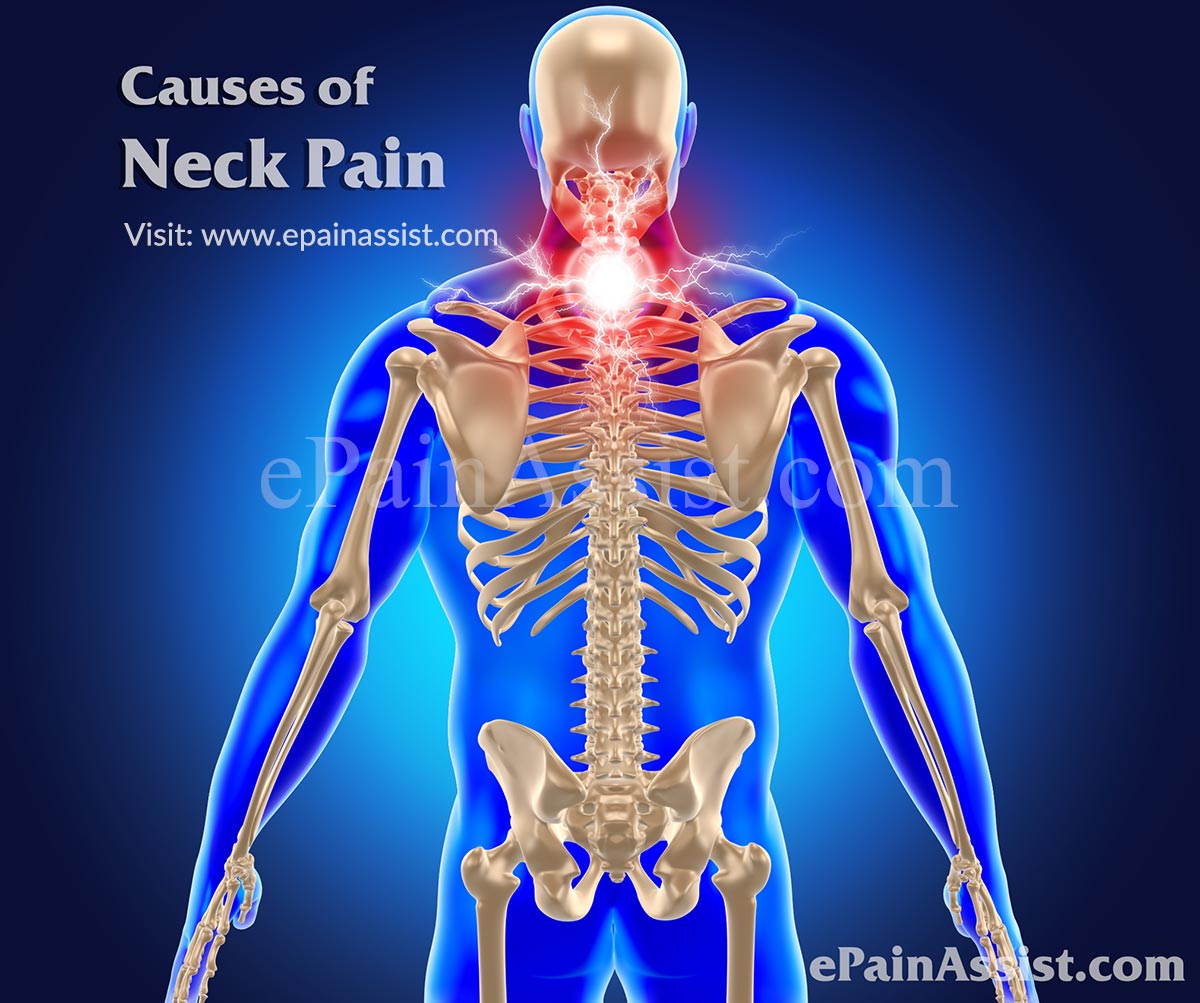
The Causes of Pain in Neck or Cervicalgia Include:[3]

  • Injury, Trauma and Accidents: Whiplash injury is a common injury sustained during an accident. This type of injury is termed as a hyperextension and/or hyperflexion injury because the head is forced to move either backward and/or forward rapidly in such a way that is beyond the neck’s normal range of motion. The muscles and ligaments in the neck get affected by this abnormal and forceful movement and the muscles react by tightening and contracting leading to muscle weakness resulting in pain and stiffness.
  • Getting Older: The spine is affected by degenerative disorders like osteoarthritis, spinal stenosis, and degenerative disc disease. One of the common joint disorders causing increasing deterioration of cartilage is osteoarthritis. Due to this, the body responds by forming new bones called osteophytes (bone spurs) that affect joint motion. Spinal stenosis is another degenerative disorder that narrows the foramen and the small neural passageways leading to compression and entrapment of nerve roots. Due to stenosis, the nerves are unable to function normally leading to neck, shoulder, and arm pain and numbness. Degenerative disc disease (DDD) affects the intervertebral discs such that they become less hydrated resulting in impaired disc elasticity and height. As the disorder progresses, a disc may bulge or herniate causing upper extremity pain, tingling, and numbness.
  • Day-to-Day Life: The spine’s balance is affected by poor posture, obesity, and weak abdominal muscles causing the neck to bend forward in order to compensate. Other conditions like stress and emotional tension may also cause the neck muscles to tighten and contract causing pain and stiffness.
  • Other Diseases and Conditions: Neck pain is usually caused by strain, but persistent pain and/or neurologic insufficiency is a cause for worry and should be taken seriously. These symptoms could be due to spinal infection, spinal cord compression, tumor, fracture and other disorders. If the patient has suffered a head injury then the chances are that the neck has been affected too. Therefore, it is prudent that medical attention is sought immediately.

Pathophysiology of Neck Pain or Cervicalgia

Several structures are responsible for causing neck pain such as bones, nerves, discs, longitudinal ligaments, muscles, facet joints, and dura. All these structures cause pain when they are irritated or inflamed. The pain can be classified as nociceptive, neuropathic, or idiopathic in origin. Nociceptive pain is the most common type of pain. Acute pain is often of nociceptive origin, but when it becomes a chronic pain then the influence of psychologic and social factors becomes more apparent. The activation of peripheral primary afferent, gives rise to nociceptive sensation of pain. Impulses are conducted by a part of myelinated A-delta fibers and unmyelinated-C, which are produced by noxious stimuli and transmit sensations that are considered pain. Primary nociceptive afferents ascend contralaterally and stimulate spinothalamic and spinoreticular neurons in the dorsal horn of the spinal cord by mediating neuro­transmitters, such as glutamate, aspartate, substance P, and calcitonin gene-related peptide. The axons transmit the stimulus to the brain travelling in 3 primary ascending tracts that project to the thalamus and the reticular formation. Damage or dysfunction of peripheral nerves or the central nervous system (CNS) causes neuropathic pain. Neurons may be sensitized to react to even an extremely slight stimulus that normally won’t cause pain. Neuropathic pain often appears as chronic pain. Reorganization of central processing is thought to be related to this pain state. Infections such as herpes zoster, metabolic diseases like diabetes, and traumatic injuries to the spinal cord and strokes that involve ischemic damage to the ascending nociceptive pathways are the most common causes of neuropathic pain. The pain is termed as idiopathic when no damage in tissues or neurons can be found.

Signs and Symptoms of Neck Pain or Cervicalgia

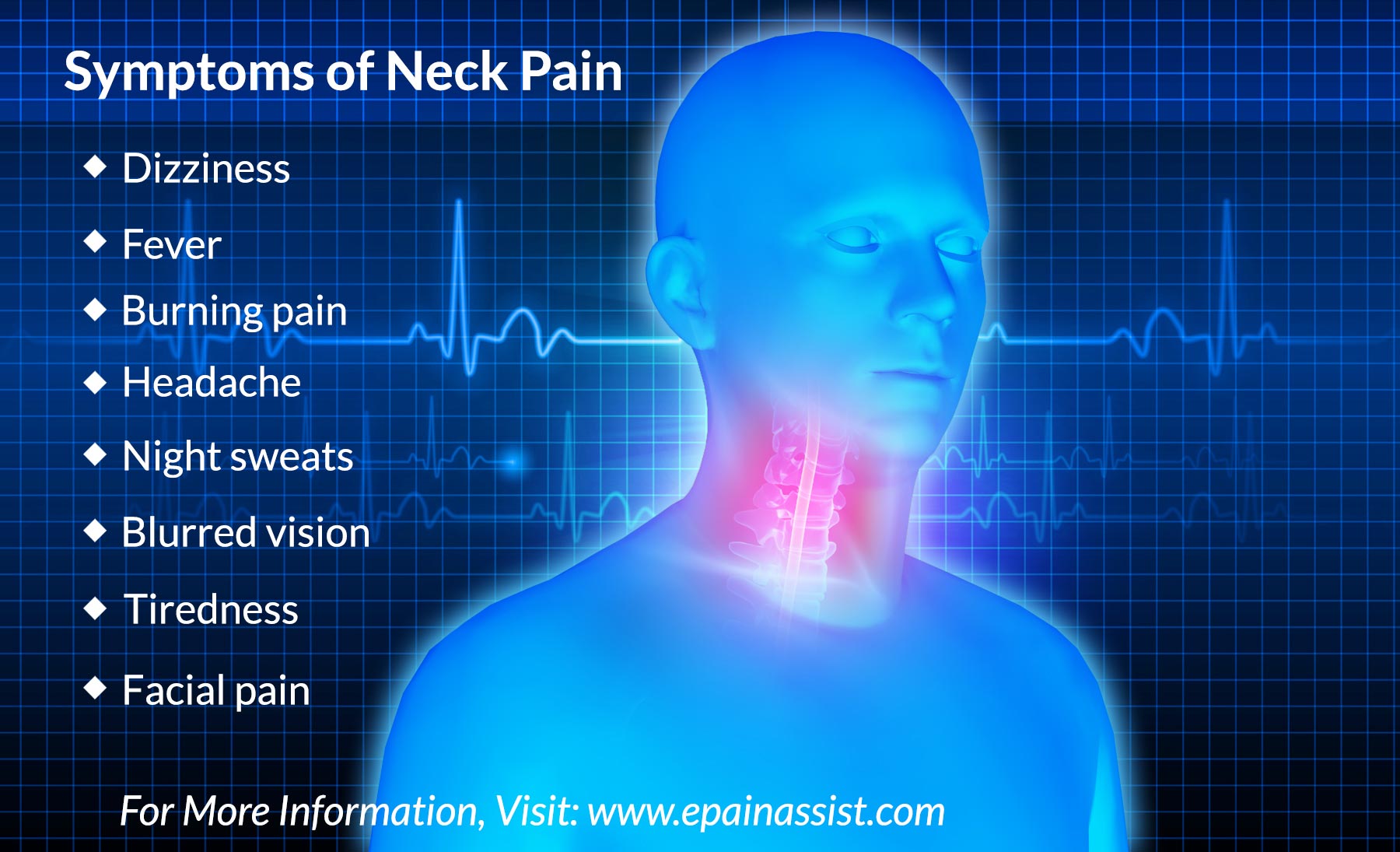
Neck Pain: Symptoms of Neck Pain or Cervicalgia

  • Neck soreness on one or both sides.
  • Stiffness.
  • Burning pain.
  • Tingling sensations.
  • Pain around shoulder blades.
  • Numbness or weakness in arms.
  • Difficulty in swallowing, talking, writing, or walking.
  • Headache
  • Night sweats.
  • Dizziness.
  • Nausea.
  • Blurred vision.
  • Fever.
  • Tiredness.
  • Unintentional weight loss.
  • Lymph node (gland) swelling due to viral infection of the throat causing neck pain.
  • Pulsations.
  • Swishing sounds in the head.
  • Facial pain.

Immediate Medical Attention Should Be Sought For The Following Symptoms:

  • High fever.
  • Photosensitivity.
  • Irritability.
  • Acute tenderness with neck movement.
  • Numbness, weakness, and/or tingling.
  • Recently sustained head or neck injury.

Treatment of Neck Pain or Cervicalgia:

Treatment depends on the cause of the neck pain. Usually neck pain originates from strain and can be treated non-surgically. This involves relieving neck pressure and muscle spasm. Other methods include:

  • Cervical Collars: These restrict movement and support the head taking the burden off the neck. Lying down also helps in limiting the neck movement and reducing pressure (weight) thus giving the muscles rest while healing.
  • Cervical Traction: This is usually prescribed for use at home. Cervical traction gently pulls the head and stretches the neck muscles thus increasing the size of the neural passageways (foramen).
  • Oral Medications: Medicines like non-steroidal anti-inflammatory drugs (NSAIDs), muscle relaxants, and narcotics may be prescribed for short-term use. Trigger point injections are beneficial in some patients.
  • Physical Therapy (PT): This is also helpful in relieving neck pain and is incorporated into the treatment plan. Heat/cold applications, ultrasound, and massage are some of the passive forms of PT and may help in alleviating pain and stiffness. Therapeutic exercises help in building strength and increasing range of motion. Patients also benefit from learning about their condition and about correct posture and relaxation techniques.
  • Surgery: Neck pain rarely requires surgical intervention. Some of the indications for surgery may be spinal cord dysfunction, severe pain not responding to conservative measures and persistent pain and/or weakness. The type of surgical procedure depends on the patient’s needs. The patient’s medical history, age, general physical condition, occupation, and other factors are taken into consideration by the surgeon. Cervical spinal surgery is complicated and requires a skilled surgeon.

Tests to Diagnose Neck Pain or Cervicalgia

  • Patient’s medical history along with physical and neurological examination is done.
  • Radiographic studies such as x-ray can reveal narrowing of disc space, fracture, osteophyte formation and osteoarthritis.
  • MRI is done to detect bulging discs and herniation that are usually responsible for neurologic symptoms.
  • Nerve conduction studies and/or electromyography are done to find out if there has been any nerve damage.
  • Bone scan detects spinal problems like osteoarthritis, fractures or infections.
  • Discogram helps in confirming or ruling out the disc(s) as the source of pain.
  • Myelogram helps in finding out any spinal canal or spinal cord disorder.
  • Nerve Conduction Velocity Test (NCV).

Exercises for Neck Pain or Cervicalgia:

  1. Neck Flexion Exercise For Neck Pain or Cervicalgia:

    Stand straight and move your head forward so that your chin touches the chest or comes as close as possible to the chest as shown in the video. Neck Flexion stretches the muscles of your neck at the back of the cervical spine and gives relief from the neck muscle tightness.

  2. Neck Extension For Neck Pain or Cervicalgia:

    Stand straight and tilt your head back, not fast or forcefully, until your face looks directly at the ceiling. Neck extension movement stretches the front of your neck muscles. Don’t continue this movement if you feels dizzy.

  3. Neck Rotation For Neck Pain or Cervicalgia:

    Stand straight and slowly turn your head to the right as much as you can, looking over the right shoulder. Hold the position at the end of the movement for 20 to 30 seconds. Repeat this exercise 5 times. Then, do the same exercise on the left side.

  4. Lateral Flexion of the Neck For Neck Pain or Cervicalgia:

    Keep your head straight and tilt your head down your right ear towards right shoulder, until you feel a slight stretch. Hold the position for 20 to 30 seconds. Do the same movement on your left side.

4 Exercises to Help With Stiff Neck

References:

Also Read:

What is Chiropractic Treatment?

Chiropractic is a branch of alternative medicine, which helps in diagnosing, treating and preventing conditions or medical problems of the neuromusculoskeletal system. D.D. Palmer founded this branch of alternative medicine in the 1890s and it was further developed in the early 20th century by his son, B.J. Palmer. There are two primary divisions of chiropractic: “Straights,” which are currently a minority. This division believes that vertebral subluxation is the root cause of all diseases and they consider vitalism, innate intelligence and adjustments of the spine important. The second division comprises of the “mixers.” This division is more amenable to conventional beliefs and medical techniques such as massage, ice therapy and exercise.[1] Chiropractic care is often used to treat problems of the neuromusculoskeletal system, which includes, but is not limited to back pain, neck pain, joint pain and headaches. Doctors of Chiropractic are usually referred to as chiropractors or chiropractic physicians. Chiropractors use a hands-on and a drug-free approach known as spinal manipulation/ adjustment which helps in examining the patients, their diagnosis and treatment. Chiropractors have a wide range of diagnostic skills and are also trained to recommend rehabilitative and therapeutic exercises along with providing counseling on nutrition, diet and lifestyle.[2]

A chiropractor does not prescribe medicines or do surgery. Rather, a chiropractor treats through manual therapies like spinal manipulation and mobilization. This is the common therapeutic procedure done by the chiropractors, i.e. “spinal manipulation” or “chiropractic adjustment.” The aim of this adjustment is to restore the joint mobility by manually applying a controlled force to the joints which have restricted movements due to tissue injury. Injury to the tissue causes pain, inflammation, and reduced functioning in an individual. Chiropractic manipulation or adjustment of the affected joint and tissues helps in restoring mobility, relieving pain and muscle stiffness along with speeding up the healing process in the tissues. Patients rarely experience discomfort during a chiropractic adjustment; however, some patients may feel slight soreness or aching after the treatment. This usually resolves within 12 to 48 hours.[3,4]

Other than spinal manipulations, Chiropractors also employ other methods such heat/cold application, exercise, ultrasound, dietary advice, massage, diathermy, hydrotherapy, electrical muscle stimulation, traction, cold laser therapy, transcutaneous electrical nerve stimulators (TENS) and infrared radiation for treatment.

In conditions like lower back pain, chiropractic care may be the chief method of treatment. In other medical conditions, chiropractic care helps by complementing or supporting the medical treatment by solving the musculoskeletal problems associated with the condition. The technique of Chiropractic manipulation comprises of applying pressure on the vertebrae which are not functioning properly. The primary goal of chiropractic treatment is to reduce the dislocation or subluxation and thus, improve the patient’s range of motion and function and reduce the nerve irritability. Chiropractic manipulation is safe and should be applied by a professional chiropractor. Some contraindications to chiropractic adjustments/manipulation are osteoporosis, rheumatoid arthritis, or any medical condition which can cause instability of the joints. Chiropractors assess their patients through clinical examination, laboratory testing, imaging tests etc. to help determine the feasibility of the chiropractic treatment. If chiropractic treatment is not feasible, then the chiropractor refers the patient to the appropriate health care provider.

What is Chiropractic Treatment?

Chiropractic Medicine and Its Fundamental Beliefs:

  • The human body has a very strong ability to heal itself.
  • The body’s structure, particularly, the spine and its function are connected.
  • The goal of chiropractic medicine is stabilizing this connection or link.[5]

Technique of Chiropractic Adjustment

Chiropractic manipulation consists of:

  • A short lever arm thrust with high velocity pressure is applied on the vertebra.
  • Following this, due to the release of oxygen, carbon dioxide and nitrogen, an audible cracking of the joints or joint cavitation occurs, which releases the pressure or cavitation in the joint.
  • Patients often feel an easing or relaxing sensation; but sometimes, they may experience slight discomfort which subsides after a short period of time. The reason for this discomfort is, if the patient becomes tense or stiff during the manipulation/adjustment, this causes spasm in the adjacent muscles and some discomfort.
  • If the patient is tensed and not sufficiently relaxed during the manipulation, this prevents the joint cavitation or cracking from occurring. In situations like this, the chiropractor may apply ice and allow the patient to relax or do electrical stimulation and massage before trying the chiropractic adjustment again.

Benefits of Chiropractic Manipulation

  • Improved joint movement.
  • Pain reduction.
  • Increased ability to tolerate pain and pressure to the paraspinal muscles.
  • Tension and muscle electrical activity is reduced.
  • It improves the blood circulation and temperature of the skin distally.
  • Stabilizes blood pressure.
  • Increases melatonin production.
  • The levels of plasma beta endorphin are increased.
  • The neutrophil respiratory burst and substance P are increased.[6]

References:

Also Read:

Simple Home Remedies for Migraine Headaches

0

“Migraines are God’s own way of letting you know your head is going to explode!” Someone who lives with migraine would surely let you know how painful migraine headaches can be. There are some home remedies, which can be beneficial to some extent in reducing migraine headaches when taken properly. In this current article we will take some simple and effective home remedies for migraine headaches.

Migraine Headaches: An Overview

“Migraines are neurological disorders, not just headaches.” As per Susan Broner, the Medical Director of the Manhattan Headache Center in New York; “Migraine is a serious neurobiological disorder which involves both the neurological as well as the vascular changes in the brain during a migraine attack.” Migraines are recurrent throbbing headaches which are often accompanied by vomiting, nausea and extreme sensitivity to light and sound. Usually migraines occur in one side of the head. Migraines may include a stage marked by visual disturbances and known as the stage of “Aura”.[1]

Simple Home Remedies For Migraine Headaches: Things To Follow

So, here let us know about some of the things to follow for getting rid of migraine headaches at home. Below are some of the home remedies for migraine headaches you can keep a note.[2]

Home Remedies For Migraine Headaches

  1. Drinking plenty of water can be a simple home remedy for migraine headaches: Dehydration can be a big cause for triggering migraine headaches. It is essential to take at least 6 glass of water every day and keep away from unnecessary dehydration which may lead to migraine headaches.
  2. Adding Magnesium to your Diet Can Help Deal with Migraine Headaches Naturally: Migraines which are associated with menstruation in women and the migraines which are associated with the aura, can be reduced or control to a good extent by taking about 400 to 600 gm of magnesium daily in the diet. However, it must be noted that taking more of magnesium can lead to diarrhea.
  3. Caffeine is an effective home remedy for migraine headaches: “Caffeine can be a double edge sword!” It is known that drinking caffeine can benefit in reducing the pain and migraine headaches. However, taking more of caffeine can also trigger migraine headaches or make the existing headache worsen.
  4. Adding Vitamin B2 or Riboflavin to Your Diet Can Help You Treat Migraine Headaches Naturally At Home: Vitamin B2 or Riboflavin is an essential nutrient which can help in reducing the symptoms of migraine or migraine headaches. It is found that taking 400 mg of riboflavin or vitamin B2 every day can reduce the number of migraine headaches after 3 months. Lean beef, whole grains, yogurt, eggs, almonds, low fat milk, spinach, mushrooms etc are some of the food sources which contain vitamin B2 or riboflavin.
  5. Taking Omega 3 Fatty Acids (Fish oil) can be a Simple Yet an Effective Home Remedy for Migraine Headaches: Omega 3 fatty acids are known to be beneficial in reducing migraine attacks. Fish oil contains omega 3 fatty acid which can be taken in the diet.
  6. Adding Ginger to Regular Diet can be a Useful Home Remedy for Migraine Headache: Taking Ginger or ginger capsules regularly can work well in treating migraine headaches in some patients.
  7. Peppermint Oil- A Home Remedy for Migraine Headaches: The smell of peppermint oil is known to be effective in reducing migraine headaches in some patients.
  8. Applying Grinded Lemon Peel for Migraine Headaches: The peel of the lemon can be grinded and applied on the forehead to reduce the pain in headaches. One can try this simple home remedy at home for getting relief in migraine.
  9. Applying Paste from Sandalwood Powder to Treat Migraine Headaches Naturally at Home: Making a paste from Sandalwood powder and applying on the forehead during headaches can help in reducing the pain in migraine attacks.
  10. Garlic and Camomile Tea- Migraine Headache Home Remedy: A tea made from garlic and camomile can be a simple and effective home remedy for migraine and can reduce the inflammation and pain in the migraine headaches.
  11. Carrot Juice and Grape Juice to Treat Migraine Headaches Naturally at Home: Grape juice in concentrated form or without adding water can help in reducing migraine attacks in some people. Carrot juice is also known to be a simple home remedy for migraine headaches.
  12. Taking Coenzyme Q10 can be a Simple Home Remedy for Migraine Headaches: Taking about 300 mg of Coenzyme Q10 every day is known to be effective in reducing migraine headaches in patients. However, it is pretty expensive.
  13. Herbs that Work as Natural Home Remedies for Migraine Headaches: Butterbur and Feverfew are two herbs which work as a simple and effective natural home remedy for migraine headaches. Feverfew is an aromatic herb plant which helps in reducing the throbbing pain associated with migraines by reducing the inflammation in the blood vessels of the brain with minimal side effects. Taking 250 mg of the herb a day can be beneficial in migraine headaches. Butterbur is one of the best natural remedies for treating migraines.
  14. “Low dose estrogen contraceptives”-Home Remedy for Migraine Headaches in Women: As said by Andrew Michael Blumenfeld, the MD of Headache Center of Southern California; “Women usually suffer from a steep decline in estrogen level before menstruating, which can be a trigger for migraine. It is said that taking low-dose estrogen contraceptives may help in women who suffer migraine headaches during menstruation
  15. Acupuncture as a Simple Home Remedy for Migraine Headaches: Acupuncture can be a wonderful alternative therapy, which can work great in relieving migraine headaches at home. It is said that the acupuncture needles actually stimulates the pain relieving chemicals of the body and thus help in easing pain in migraine headache.
  16. Cold or Hot Compress” as Simple Home Remedies for Migraine Headaches: Hot and cold treatments work as a nice home remedy for migraine headaches. You can either warm up or cool down for reducing migraine attacks.
  17. Exercise is the Best Home Remedy for Migraine Headaches:Exercise is the wonder treatment!” Exercise can help in preventing or reducing migraines in patients. Exercise actually help in removing tension and stress which are the obvious triggers for migraine. Apart from this, exercise also releases endorphins, which act as mild sedative. However, make sure intense and over exercise can worsen the migraine.
  18. Rubbing the temples gently can be a simple home remedy for migraine headaches: “A simple head rub can do some magic!” It is all about feeling good when you are trapped inside a well of pain. You can find some relief with gentle rub of your temples when you have migraine headaches.
  19. Massage-The Best Home Remedy for Migraine Headaches: A study found that migraine patients who suffered migraines on frequent basis had headaches after six weekly massage sessions. So, massage can be a simple home remedy for migraine headaches. It actually relieves stress and tension and this can work fine in preventing more of migraine attacks.
  20. Meditation is an Effective Simple Home Remedy for Migraine Headaches: Meditation is a simple and effective proven stress reliever. You can get relief from pain and stress by practicing meditation regularly. Migraine headaches can be managed to a fair extent with meditation.
  21. Breathing Exercises- The Simple Home Remedy for Migraine Headaches: Breathing exercises are known to be pretty effective in relieving stress and helping you ease the pain in migraine headaches.
  22. Sleeping Well -An Effective Way to Treat Migraine Headaches Naturally at Home: Effective sleeping is one of the best home remedy for migraine headaches. It is important to have sound and proper sleep in order to relieve from stress and tension which can trigger migraine. So, try to have proper sleep and make sure you have a calm and quiet environment around you for getting an uninterrupted sleep.

Ways to Prevent Migraine Headache!

  1. Avoid alcohol that can cause migraine headaches: It is always good to avoid alcohol or smoking for keeping a good general health. However if you are very much in to alcoholic intake; then make sure you are avoiding the alcohol which gets you a hangover in just one drink, which may be a migraine attack; and also avoid the alcohol that gets you a headache within 8 hours of the consumption.[8]
  2. Avoid skipping of meals as that can trigger migraine headaches: It must be noted that fasting actually increases the chances of getting migraine headaches. So, make sure you are eating in every 3 to 4 hours so as to keep away from empty stomach.
  3. Avoid foods that trigger migraine: There may be some foods like chocolates, aged cheese, etc., which can trigger migraine in some people. If you experience the same, eliminate these foods which can trigger migraine attacks.
  4. Avoid Sleeping Forcibly to Prevent Migraine: “Sleep is good for health; but not a forced sleep!” If you are not getting sleep do not try to sleep forcefully which cannot bring you sleep and keep you more awake and cause more of headache. Try to do some quiet and light activities like, read or be calm and lie down until you feel drowsy.
  5. Avoid Distractions That Can Cause Migraine Headaches: There may be more of migraine headaches with distractions like loud noise, television etc. Keep away from such distraction in order to have some relief from the attack.
  6. Avoid Direct Sunlight to Prevent Migraine Headaches: Direct sunlight exposure can also trigger migraine attacks. Make sure you avoid more of exposure to the direct sunlight.[3]

Activities that Can Help Get Rid of Migraine Headaches Naturally:

Retreat self from your usual activities and make a calm environment for self: “No treat can be a better treat than a treat gifted to self!” Why not take a break from the work when you feel exhausted or stressed and take a relaxing massage or have a day out with friends for some smiling times? The best things you can do is keep a special time for self, at least for 15 minutes every day and do the things which you like the most; like playing video games or gardening or anything else you love doing. It helps in keeping a good balance in your mind and helps you keep away from the stress of daily life which can trigger migraine attacks. You can have a special time for self and be with the best of you in a calm, quiet and pleasant environment. It feels relaxing![4]

Simple Tips to Manage Migraine Headache Triggers!

Maintaining a migraine diary can be pretty effective in managing the triggers for your migraines and in managing migraine headaches to some fair extent. You can have a diary to note down the things which trigger your migraine, you can note down when your migraine start, how long they last and what provides the best relief in your migraine attacks. By keeping the record, you can adopt the things which work as the best remedy in your migraines and avoid the things which worsen your condition in migraine.[5,6]

Final note for Migraine Headaches:

“No pain can be ignored; but they can be managed!” People who strive against migraine or migraine headaches must be having their toughest time when the migraine attack strikes them. But they cannot ignore or skip off the pain moment. However, there are some simple home remedies for migraine headaches, which can help them manage their pain to some extent. Hope the above mentioned home remedies work well in managing migraine headaches.

“Keep calm, rest, adjust and move on!”

References:

Also Read:

Also Watch:

Are Common Warts Contagious | Symptoms, Treatment & Home Remedies for Common Warts

0

Common Wart or Verrucae Vulgaris is a skin lesion observed most commonly in feet and hand. Wart is caused by HPV virus and often seen in immune deficiency patient. Disease is seen in all ages.

Common Warts

Are Common Warts Contagious?

Common Wart or Verrucae Vulgaris is a contagious disease and passed from one individual to another by contact. HPV virus or human papilloma virus when comes in contact with injured skin develops wart.[1] Common Wart spreads within body once infected from one area to different site. Warts will spread from one limb to another limb by contact. Once infected by contact lesion or wart, tumor may develop after several months. Mode of spread for common warts is touch and sex. Sexual transmitted warts are secondary to contact between sexual organ like skin of genitals and vulva or mucosa of vagina. Vaginal wart may remain undiagnosed for several years. Warts are more common from biting fingernails or picking at hangnails.[2]

Classification or Types of Common Warts:

Seed Wart

  • This is a type of common wart seen over fingers, around the nails, and on the back of the hands.
  • This type of common warts can have black dots that look like seeds.

Mosaic Warts or Foot/Plantar warts

  • Mosaic wart are the type of warts that grows in cluster with black dots thus called mosaic wart. It is flat and sometime because of pressure from walking grows inward.
  • Seen over soles (plantar surface) of the feet and very painful while walking on uneven surface.

Mosaic Warts or Foot/Plantar warts

Flat Warts

  • This type of common wart is mostly seen under the beard but can occur any where in skin. It is observed over face and leg. Are smaller and smoother than other warts.
  • Flat wart is at time wide spread and may be found up to 90 to 100 warts.

Filiform Warts

  • Filiform wart is a thin filamentous type wart spread over face, around mouth and fingers. It is shaped like long threads over surface of skin of fingers. Looks like long threads or thin fingers that stick out.
  • It grows fast and multiple in numbers but not as wide spread as flat wart

Symptoms of Common Warts:

Below we will take a look on symptoms of common warts:[3]

  • Most common symptom of common warts is they are accompanied by itching in the affected area.
  • Most of the common warts are rough to touch
  • One more common symptoms of common warts is they are primarily seen on hands, fingers etc.
  • Common warts are mostly flesh colored, pink or white, or tan.
  • Common warts are also seen in toes, legs, foot, face, face, under or around the nails etc.
  • Most of the common warts have rough surface with black pinpointed spots representing the small clotted capillaries.
  • Usually the common warts range from 0.5 mm to more than 10 mm in diameter.
  • Some common warts like the Filiform warts have single long stalk, growing mostly on the face.
  • Among other common symptoms of the common warts are, they are mostly rounded or oval in shape, their surface can either be flat, raised or irregular etc.

Treatments for Common Warts:

Here let us take a look on some of the ways to treat common warts along with some effective home remedies for common warts.

Treatment of Warts

Treatments for Common Warts Using Medications:

  • Imiquimod or Aldara is a topical medication which aids in improving your body’s capability to fight against foreign bodies. This may be beneficial in treating common warts, especially the genital warts.
  • There are also some over-the-counter medications, which can be used for treating common warts.

Treatments for Common Warts Via Injections:

  • A drug named Bleomycin can be injected in to the wart that would kill the virus. This is mostly used in severe cases of common warts. This can help in permanent removal of the wart.
  • Candida antigen can also be injected for stimulating the immune system of the body for fighting off the common wart.

Some Other Least Painful Methods for Treating Common Warts:

  • Cryotherapy for Treating Common Warts:

Cryotherapy or freezing therapy is one of the least painful methods of treating common warts. This is mostly done at doctor’s office and involves application of liquid nitrogen to the wart. Freezing with liquid nitrogen causes the formation of a blister under and around the wart. Then, in about a week the dead tissue sloughs off. Such a method may also be used for stimulating our immune system to fight viral warts. There may be a requirement for repeating the treatments for best results.

There may be a slight pain and discoloration of the skin on the treated area, with cyotherapy.

  • Sylicylic Acids for Peeling Common Warts:

Sylicylic acids are available as a patch or a liquid for removal of the common warts. You can go for a 17% salicylic acid solution or a 15% patch to use on the warts regularly, at least for a week. All it is required is to soak the common wart in warm water for about 15 to 20 minutes and then apply the medication. File away any dead skin using a disposable emery board or with a pumice stone between the treatments.

Apart from sylicylic acid, other acids like Bichloroacetic acid or Trichloroacetic acid can be used. Here, you may require your doctor first shave the surface of the wart and then apply the acid using a wooden toothpick. It might require repeated treatments every week. There may be side effects like stinging or burning at the treated area.

  • Using Duct tape for treating common warts:

One more, least painful method for treating common warts can be with the use of silver duct tape. You need to cover the wart with the duct tape for about 6 days at first. Then after soaking it in water gentle you have to remove the dead tissue with the help of a pumice stone or a disposable emery board. After this much, you have to leave the wart exposed for about 12 hours and then repeat the treatment procedure until it is gone.

Treatments for Common Warts Using Laser Therapy:

Laser therapy is one more treatment procedure used for treating common warts. Here, the pulsed-dye laser treatment cauterizes or burns the tiny blood vessels. The infected tissue gradually dies and the common wart falls off. However, there are not much evidence on the effectiveness of this method and it can be painful and scarring too.[4]

Home Remedies for Common Warts:

Below are some of the most effective home remedies for treating common warts.[5,6]

  1. Garlic: Garlic being loaded with antiviral, antifungal and antibacterial properties, is an effective home remedy that helps in fighting viral infections that causes the common warts. To get rid of common warts using garlic as a home remedy, just follow the instructions below.

    • Crush a garlic clove and apply the sane on the wart area.
    • Cover it with a bandage and leave it for about 20 minutes.
    • Then wash the area thoroughly.
    • Repeat the process two times regularly for at least a week.
  2. Baking soda: Baking soda is an antiseptic and has strong anti-inflammatory properties which can help combat viruses causing the common warts. So, below we will talk about the instructions for using baking soda as an effective home remedy for common warts.

    • Mix one teaspoon of white vinegar along with baking soda for making a thick paste.
    • Dab the prepared paste on your warts two times a day.
    • Castor oil can also be used to mix with baking soda for preparing the paste.
    • After applying the paste, cover it with a bandage and leave it on overnight. Continue this for some days till the wart leaves you.
  3. Apple cider vinegar: This is also one of the most effective home remedies for common warts. It has antiviral, antifungal, and antibacterial properties, which helps it fight against the infection. Follow the instructions below to use the home remedy for treating common warts.

    • Take the apple cider vinegar and dilute two parts of it with one part of water.
    • Next, apply this prepared solution on the affected area or the region of your wart with the help of a cotton ball.
    • Cover the area with a bandage and leave it.
    • Repeat this home remedy for some weeks. You will see, within few days of the treatment the warts start turning black in color and then they fall off gradually.
  4. Banana Peel: Banana peels are also wonderful home remedies for common warts because of their antioxidant properties. The chemicals and oils found in the peel dissolve the wart and aid your immune system to fight off the virus causing the warts. Look below to know how to use banana peel as an effective home remedy for common warts.

    • Tape a piece of banana peel over your wart.
    • Leave it overnight.
    • Do it several times for best results and continue it for 2 weeks.
    • Apart from this, you can also rub the affected portion gently with a fresh slice of banana.
  5. Aloe vera: This is yet another effective home remedy to help get rid of common warts because of its anti-inflammatory properties. Follow the below instructions while using aloe vera for warts.

    • Take one aloe vera leaf for extracting the gel out of it.
    • Apply the gel on your wart with the help of a clean cotton ball.
    • Then use a bandage and cover it.
    • Repeat this two times daily for about 2 weeks for best results.
  6. Tree tea oil: The antiviral properties of tea tree oil make it a wonderful natural ingredient for treating common warts. Follow the instructions below to use tea tree oil in treating your warts at home.

    • As tea tree oil is very strong, you need to dilute it with water or aloe vera gel before using it on the affected portion.
    • Apply the diluted tea tree oil on your warts many times in a day, especially at night before bed.
    • The oil quickly absorbs in the skin and fights the virus causing warts.
  7. Castor oil: Castor oil is known to be used in treating various skin disorders. It is also a good home remedy for common warts. Ricinoleic acid, or the main component of castor oil is known to be having anti-inflammatory and antibacterial properties which can fight against the virus causing warts. Look below to know how to use castor oil for treating common warts at home.

    • Castor oil is to be used at the affected area several times a day.
    • You need to soak a cotton ball in castor oil and tape it over the wart. Do this before going to bed and leave it overnight.
    • Clean the area in the morning and soak it in warm water for some time.
    • Then with the help of a pumice stone, rub off the dead skin.
    • Do this for few days and you can see the wart falls of gradually.
  8. Vitamin C: Because of high acidic nature, Vitamin C can act as a wonderful home remedy for treating common warts. Follow the instructions below to use Vitamin C for treating common warts.

    • Crush 2 to 3 tablets of Vitamin C tablets at first.
    • Add a little water and mix it get a fine paste.
    • Rub the paste on your warts and cover the affected area with a bandage. Though it might initially cause burning sensation, but it gradually leaves off and gets the effective result in treating the wart.
  9. Papaya: Another useful home remedies for common warts is Papaya. There is a presence of an enzyme in Papaya which makes it useful in digesting dead tissue. To know how to use it for treating your wart, follow the instructions below.

    • Make shallow cuts on the surface of an unripe papaya and collect the sap that runs out of it and then allow it to coagulate.
    • Then, mix the thickened sap with water and apply it two times in a day over the wart.
  10. Honey as a home remedy for common warts: Honey can be used to treat common warts because of its antibacterial, antiviral properties. Follow the below instructions.

    • At first file away the wart if possible and then cover it with a thick layer of honey.
    • Then wrap a piece of cloth around it and leave it for a day.
    • Go for the remedy several days.
  11. Birch Bark: The birch bark is also used for treating common warts at home as it contains salicylates which help in fighting against the virus causing warts.

    • Dampen a piece of birch bark with water and tape it over the area affected by the wart and leave it for some time. Repeat it several times.
    • Powdered birch bark can also be used to prepare tea first.
    • Then, dip a piece of clean cloth in the cup of the tea and press it on the wart for effective results.
  12. Pineapple Juice: Pineapple juice softens the wart because of the presence of a special enzyme that dissolves the wart and also because of high level of acidity. So, to use this as a home remedy for common warts, look below for the instructions.

    • Just take the pineapple juice and soak your wart in it for 5 minutes.
    • Then completely pat the area dry.
    • Do this for about 3 times in a day.
  13. Hot Water Soaks: Soaking the common warts in hot water can be a real effective home remedy for treating them. A hot water soak aids in fighting the virus causing warts and also prevents the infection. However, it is essential for you to note that before following this home remedy, you slough the affected skin portion with a pumice stone for the best results. You can add Epsom salt to the hot water to make it more effective.

  14. Raw potato: Raw potato can also work as a home remedy for treating common warts. All you need is take a cut piece of raw potato and rub over the wart several times a day.

  15. Other effective home remedies for common warts: Among other effective home remedies for common warts include the fresh basil leaves, bee propilis, dandelions, etc.

Prevention Against Common Warts:

Common warts can be prevented by following some preventive measures. Below we will list down some of the ways for preventing common warts.

  • Avoiding direct contacts with warts: One of the most important point to remember for preventing common warts is, avoid direct contacts with warts which also includes your own warts
  • Do not pick at warts: One more important measure to keep noted for reducing the risk of getting common warts is not to pick at the common warts which may spread the virus.
  • Stop biting your nails: Are you aware that most of the common warts growing in or around the nails occur mostly when the skin around the nail is broken? So, in order to prevent common warts make sure you are not biting your nails which have a greater chance of growing common warts. By this, you are giving rooms for the virus.
  • Precautions while using emery board, nail clipper, etc: If you have common warts at any area and want to groom it, make sure you are not using the same one as you use on your healthy nails or skin without the warts. It is essential for you to groom with care. It is good for you to use a disposable emery board and use an electric razor for shaving the areas with common warts. This would help you in reducing the risk of getting common warts in the healthy skin or nails.
  • Among other preventing measures for preventing common warts include, washing hands carefully after touch the warts or surfaces such as shared exercise equipments, avoid the sweating at the skin of common wart area, keeping away from contacts with individuals suffering from common warts, etc.

Conclusion:

Common warts mostly can be treated at home with effective home remedies. However, in severe cases or in cases where you do not find the home remedies pretty effective in treating your warts, seek for medical help and get rid of them.

References:

Also Read:

FAQ on Fibromyalgia: Symptoms, 11 Painful Trigger Points, Causes, Risk Factors

What is Fibromyalgia?

Fibromyalgia is a chronic somatic disease of muscles, tendon, ligaments and joints.1

What is Fibromyalgia?

Is Fibromyalgia a Common Disease?

Fibromyalgia is not a common disease like upper respiratory tract infection or bronchitis, but the percentage of patients suffering with fibromyalgia is slowly increasing over the last few years.

Fibromyalgia is more common in females between age 20 and 40 years of age. Epidemiological studies published in Europe and United States suggests prevalence rate of fibromyalgia in general population is between 4 to 16 %. In the United States 4% of population suffer with symptoms of fibromyalgia at least once in lifetime.

What Are The Common Symptoms of Fibromyalgia?

Common fibromyalgia symptoms are muscle pain1, joint pain, joint stiffness, sleep disturbance, and cognitive symptoms like stress, anxiety and depression.

Why Fibromyalgia Pain is Intolerable?

Fibromyalgia pain is a neuropathic pain, which is severe in intensity and continuous in character. Pain is exemplified as allodynia and hyperalgesia. Pain is widespread over neck, shoulder, upper arm, lower back, thigh and buttocks. Pain may be severe during entire day and less intense during nighttime. Widespread pain is often bilateral. There are 18 painful trigger points identified causing Fibromyalgia. Fibromyalgia is diagnosed when 11 painful trigger point areas are identified during examination at one time. Pain is intolerable because of severe intensity and widespread distribution of tender spots.

Why 11 Painful Trigger Points for a Diagnosis of Fibromyalgia?

Trigger points

There are several diseases causing muscle pain like myofascial pain syndrome, muscle spasm, muscle tear and myoclonic pain syndrome. In the past Fibromyalgia was diagnosed as widespread disease in comparison to other pain producing muscle diseases. Diagnosis of Fibromyalgia with 11 tender points is no longer considered as mandatory. Severe intractable wide spread muscular pain with several tender spots and jump sign is diagnosed as Fibromyalgia.

What is “Jump Sign”?

Jump sign is a reaction to examination of tender spot. Physician while examination the patient, touches the tender spot, causing the patient to jump. Jump Sign is a sudden pain of much higher intensity than resting pain. Sudden reaction of jumping away from examination or simple touch is called “Jump Sign”.

Does Anatomical Position of Tender Point Changes With Time?

Yes. Most common location of Fibromyalgia severe pain is neck, shoulder and the lower back. Tender spot over any dermatomal area may change position during subsequent examination. Fibromyalgia is a disease of muscle at microscopic level. Physiological abnormalities of muscles may frequently affect or migrate to adjacent area and cause severe pain.

What is the Cause of Fibromyalgia?

Fibromyalgia is a disease of skeletal muscles. Skeletal muscles are important for movements of extremities and core body.2 There are several theories regarding cause of Fibromyalgia suggested by complicated research studies. Lab abnormalities found in research studies may not be observed in all patients with Fibromyalgia like symptoms. Specialized lab studies suggest Fibromyalgia may be a disease caused by abnormal pain receptors or abnormal secretion of neurotransmitters. Few studies also indicate Fibromyalgia may be an autoimmune disease. Genetic predisposition is also observed in twins and families. Fibromyalgia is also caused by neuroendocrine irregularities like serotonin metabolism abnormalities or dopamine deficiency.

Is Fibromyalgia Associated With Cognitive Dysfunction?

Yes, physical, emotional and childhood stress may influence mental function and cause cognitive dysfunction. Cognitive dysfunction is a dysfunction of intellectual, perceptive and mental ability of brain. Cognitive dysfunction such as anxiety, depression, insomnia (unable to sleep) and feeling miserable are very common in patients suffering from Fibromyalgia.

Are There Risk Factors, Which May Induce Fibromyalgia?

There are risk factors associated with Fibromyalgia. Scientific evidence does not suggest any of these risk factors causing Fibromyalgia.

Which are the Risk Factors Associated With Fibromyalgia?

Persistent and repeated viral infection, hypothyroidism, Lyme disease, chronic fatigue syndrome, sleep disorder and depression may precede or succeed Fibromyalgia symptoms. Fibromyalgia symptoms are also seen in patients with history of insufficient finances, widowed, female patients, and chronic smoking.

References:

Also Read:

Also Watch:

De Quervain’s Tenosynovitis

De Quervain’s tenosynovitis[1] is a condition of inflammation of tendons in the thumb that leads to tenosynovitis. The repeated rubbing of the swollen tendons and their coverings adjacent to their narrow tunnels results in de Quervain’s Tenosynovitis.[1] This leads to severe pain at the base of the thumb and this pain further gets extended to the lower arm.

The tendons involved in the thumb are abductor pollicis longus and extensor pollicis brevis tendons.

This is found more frequently in racket sports like badminton, squash, ten pin bowling, tennis and canoeing. Golfers thumb could also be taken as an example for de Quervain’s tenosynovitis.

 De Quervain's Tenosynovitis

Causes and Risk Factors of De Quervain’s Tenosynovitis:

The cause of de Quervain’s tenosynovitis is still not known. However, same repeated movements, certain inflammatory conditions, repetitive grasping, a direct blow to the thumb could be helpful in identifying this disorder.

Few other causes may include:[2]

  • Muscle weakness.
  • Muscle tightness.
  • Joint stiffness.
  • Excessive training or activity.
  • Poor sporting technique or equipment.
  • Poor posture.
  • Poor ergonomics.
  • Insufficient warm up.
  • Injury to the nerves, neck or upper back.

Racquet sports and gardening are also the possible causes for exacerbation of de Quervain’s tenosynovitis.

Signs and Symptoms of De Quervain’s Tenosynovitis

The symptoms of de Quervain’s tenosynovitis may include:

  • Pain, which may occur suddenly or gradually along the back of the thumb directly over two thumb tendons, is common in de Quervain’s.
  • Feeling of increased pain in the affected area when pressure is applied.
  • The pain travels from the thumb along the forearm.
  • Pain and swelling at the base of the thumb could also be experienced.
  • Pain could become severe with thumb and wrist movements.
  • Thumb movements may be painful and difficult.[3]

Treatment for De Quervain’s Tenosynovitis[2]

Treatment for de Quervain’s tenosynovitis may include:

  • Anti inflammatory drugs may be recommended.
  • Cortisone injection is really helpful.
  • TENS Unit.
  • Splinting, bracing, and rest.
  • Extra thick pens can be used for reducing the pressure on the tendons.
  • Cold therapy and ultrasound therapy for reducing pain.
  • Surgery as a last resort is performed only when cortisone injection fails to work properly.
  • Activity modification and training.
  • Appropriate plan for return to activity.

Physiotherapy for de Quervain’s tendonitis is important in speeding up the healing process and to get optimal results. Physiotherapy also decreases the likelihood of recurrences in the future. Physiotherapy may include:

  • Soft tissue massage.
  • Electrotherapy
  • Joint mobilization.
  • Heat and ice treatments.

Exercises for De Quervain’s Tenosynovitis:

Strengthening and stretching exercises help in treating this problem.

EPL Stretch Exercise: Curl the fingers up around the thumb keeping the elbow straight. Bend the wrist towards the side of the little finger gently until a mild to moderate pain-free stretch is felt. Hold for 5 seconds and release. Repeat 5 to 10 times ensuring there is no exacerbation of symptoms.

Tennis Ball Squeeze: This exercise involves holding a tennis ball in the hand and squeezing it as hard as possible ensuring comfort without pain. Hold for 5 seconds and release. Repeat 5 to 10 times ensuring there is no exacerbation of symptoms.[4]

Investigations:

A specific type of test known as Finkelstein test is done on physical examination to diagnose de Quervain’s tenosynovitis. This test is done by making a fist by placing the thumb beneath the palm. The tendons that are swollen are stretched and pulled through the tight space when the wrist is bent towards the outer side. If this test causes pain then it is positive for de Quervain’s tenosynovitis.

Other diagnostic tests may include:[5,6]

References:

Also Read:

Sprained Ankle or Twisted Ankle: Causes, Symptoms, Treatment, Exercises, Risk Factors, Recovery Period, Complications

What is a Sprained Ankle or Twisted Ankle?

Sprained ankle or a twisted ankle is an injury, which occurs when the ankle is rolled, twisted or turned in an awkward manner resulting in tearing or stretching of the ligaments whose main purpose is to help in stabilizing the ankle bones together.[1] Majority of the cases of sprained ankle or a twisted ankle comprise of injuries to the ligaments on the external region of the ankle. Treatment depends on the severity of the ankle sprain. If the ankle sprain is mild, then conservative measures with over-the-counter (OTC) pain medications may suffice. If it is a severely sprained ankle, then medical attention/treatment is required.

Ankle Sprain

What Causes Sprained Ankle or a Twisted Ankle?

The situation giving rise to majority of sprained ankle or a twisted ankle is a shifting movement against your foot for example in a football tackle. While the foot will be turned inward, your ankle rolls outward. The ligaments that are outside the ankle will tear after stretching excessively. It is rare for case which the foot turning outward and the ankle rolling inward. The ligaments inside of the ankle are damaged as a result. Other causes of sprained ankle or a twisted ankle can include:

  • Falling and landing on the ankle causing it to twist can lead to sprained ankle or a twisted ankle.
  • Jumping and landing awkwardly on the ankle.
  • Walking, jogging or exercising on irregular surfaces can cause an ankle sprain.[2]

What are the Signs and Symptoms of Sprained Ankle or a Twisted Ankle?

Pain is often the reported symptom from the patients with a sprained ankle or a twisted ankle. Inversion injury causes this. In this process, the foot rolls underneath your leg or ankle. The major signs and symptoms might include:[3,4]

  • Pain upon weight bearing on the injured foot.
  • Pain upon movement of the injured foot can be a symptom of ankle sprain.
  • Swelling of the ankle.
  • Bruising of the ankle.
  • Redness and warmth.
  • Restricted range of movement is a common sign of a sprained or twisted ankle.
  • There may be a “pop” audible or felt when the ankle sprain injury occurs.

What are the Risk Factors for Sprained Ankle or a Twisted Ankle?

As stipulated above, twisting of the ankle underneath the leg is known as inversion. Some individuals tend to be predisposed by the sprains. The injuries are more common for people with hind foot varus (the posture and the general nature of the heels are turned slightly towards the inside. Turning on the ankle i.e., sprained ankle or a twisted ankle is easier in this situation.

A new sprain can be formed when one has had a history of a sprained ankle or a twisted ankle. Instability is one of the risk factors of sprained ankle or a twisted ankle in this consideration. Those who are more predisposed are those who have weak muscles, especially those known as peroneals running along the exterior part of the ankle.

  • Participating in sports such as football, soccer, basketball, and tennis increases your chances of spraining your ankle as sprained ankle or a twisted ankle is a common sports injury.
  • Previous ankle injury increases the risk of spraining your ankle again.[5]

What are the Complications Involved in Sprained Ankle or a Twisted Ankle?

Surgery is needed in rare situations for sprained ankle or a twisted ankle. Chronic instability can result due to improper rehabilitation of the ankle as noted above. Prior to further damaging of the ankle, it is to sort it with surgery or physical therapy.

How is Sprained Ankle or a Twisted Ankle Graded?

  1. Grade 1 Sprained Ankle or a Twisted Ankle: There is mild stretching or tearing of ankle ligaments with some mild or zero joint instability. Mild pain, swelling and stiffness may be present. Patient may experience some difficulty in walking or running.
  2. Grade 2 Sprained Ankle or a Twisted Ankle: There is moderate tear of the ligaments with some joint instability. Patient experiences pain upon walking. Swelling and stiffness is also present along with mild bruising.
  3. Grade 3 Sprained Ankle or a Twisted Ankle: There is complete rupture or tear of the ligament fibers. Patient experiences acute pain and severe joint instability. Extensive swelling and bruising is present.[6]

How is Sprained Ankle or a Twisted Ankle Diagnosed?

Taking into consideration the fact that sprained ankle or a twisted ankle are common injuries, its diagnosis is fairly easy. A patient with a sprained ankle or a twisted ankle can be discerned through pain being located at the outside the ankle with swellings and tenderness. The use of X-ray will help to determine the fact that spraining and tearing of the ankle ligaments has happened and not the bone has been broken.

Other injuries are prone to occur and thus, it is unwise to regard any injury to be a sprained ankle or a twisted ankle. Tearing of the peroneal tendons as stipulated above is such an example. The anterior process of calcaneus and the fifth metatarsal are some of the bones that can be fractured. Warranty of an MRI (Magnetic Resonance Imaging) in severe cases has been recommended so as to rule out other ankle problems like damage of the cartilage. A sprain is not typically diagnosed with an MRI.

Following are the sequence of tests suggested or conducted by your physician:

  • Physical exam, in which the doctor will check for points of tenderness and patient’s range of motion to determine if any specific position or movement causes pain.
  • X-ray to rule out any fractures.
  • Bone scan helps in detecting stress fractures.
  • Computerized tomography (CT) scans.
  • Magnetic resonance imaging (MRI) is helpful in visualizing any injuries to the soft tissue.[7]

How is Sprained Ankle or a Twisted Ankle Treated?

Treatment for Ankle Sprain or Twisted Ankle

The severity of the injury determines the treatment for sprained ankle or a twisted ankle. Many of the individuals are treating their less painful sprained ankle or a twisted ankle at home.

Medications for Sprained Ankle or a Twisted Ankle

Over-the-counter (OTC) relievers in most cases help in treating sprained ankle or a twisted ankle. Examples of such drugs are: ibuprofen (Advil, Motrin IB, others), acetaminophen (Tylenol others) or naproxen (Aleve, others) for pain management accruing from an ankle sprain.

Devices for Sprained Ankle or a Twisted Ankle

Crutches or Braces may be used in order to help with the pain caused by an ankle sprain when you are walking. There are movable devices that can be suggested by your doctor for you to use it such as a splint.

Physical Therapy (PT) for Sprained Ankle or a Twisted Ankle

The balance, strength, flexibility and the range of motion of your ankle can be restored through the help of your physical therapist as soon as the swelling subsides.

For the muscle to support the joint once again, stability and balance training is important in retaining the muscle to work in unison. Standing on one leg is an example of the challenging exercise that might be involved in the process.

Seek the doctor’s advice regarding when you are fit to resume the exercise that you were engaging in prior to getting your sprained ankle or a twisted ankle. In order to prevent re-injury, you might be needed to wrap your ankle or wear an ankle brace.

Surgery and other Procedures for Treating Sprained Ankle or a Twisted Ankle

An evaluation of a musculoskeletal specialist might be recommended by your doctor for sprained ankle or a twisted ankle. Proper healing of your joint might be achieved through the use of a walking boot, which immobilizes it. Surgery for repairing the damage of sprained ankle or a twisted ankle might be recommended by doctors for severe tear of the ligament, especially in elite athletes.

Home Treatment for Sprained Ankle or a Twisted Ankle

What to do for a Sprained Ankle or a Twisted Ankle at Home?

Many individuals are able to successfully treat their sprain at home.

  • R.I.C.E (Rest, Ice, Compression, and Elevation) therapy should be done.
  • Over-the-counter pain relievers such as ibuprofen, naproxen or acetaminophen help in relieving pain, swelling and inflammation.
  • The ankle can be taped for support and to reduce swelling.
  • Crutches for partial weight bearing can be used.
  • A cast or a brace can also be used.
  • After the swelling has subsided, gentle massage can be done to prevent the formation of adhesions.
  • After the swelling has subsided, then physical therapy exercises can be started to restore the ankle’s range of motion, flexibility, strength and balance.[8,9]

Ankle Sprain or Twisted Ankle: Treatment, Causes, Symptoms

How Long Does It Take To Heal a Sprained Ankle or a Twisted Ankle?

The general outcome for sprained ankle or a twisted ankle is usually good. Recovery for most of the ankle sprain patient has been absolute with majority of patients resuming activities, sports and normal live. Instability in walking has been occasioned by those who do not treat the ankle following a sprained ankle or a twisted ankle. Patients who are having ankle sprains repeatedly might result in having chronic instability.

Damage within the ankle can result owing to the repeated episodes of sprained ankle or a twisted ankle, which are dangerous. Repair should be recommended after this type of patient has been considered.

Is Rehabilitation Required for Sprained Ankle or a Twisted Ankle?

Every injury involving ligaments requires rehabilitation. Re-injuring of your sprained ankle or a twisted ankle is probable and it might fail to heal completely. Three phases are required for recovery of sprained ankle or a twisted ankle regardless of the situation if it is mild or severe.

  • Phase I. Rest, protect and reduce swelling of the sprained ankle or a twisted ankle.
  • Phase II. Restoring the flexibility of the ankle, the strength and the range of motion.
  • Phase III. This is the gradual return of activities that are straight-ahead while doing maintenance exercise. Later you can engage in elaborate sports like basketball, football or tennis.

Coordination, balance and flexibility of your ankle will require prescribed strengthening routine exercise from your doctor. This is once you are back on your feet. While you have supportive ankle brace or a taped ankle you can later jog, run or walk.

The rehabilitation program reduces the probability of hurting the same ankle; therefore, it is important to complete it. Arthritis, chronic pain, and instability of your ankle can result due to incomplete rehabilitation process of sprained ankle or a twisted ankle. Continued ankle pain is an indication of a ligament that did not heal in the proper manner or another injury also occurred.

Your soft tissues should be in good shape to ensure muscle flexibility, strength, and balance. The warning that the body gives should be adhered to and slowing down to avoid fatigue and pain in order to avoid any future ankle sprain.

What Exercises are Recommended for Sprained Ankle or a Twisted Ankle?

Stretching Exercises for Sprained Ankle or a Twisted Ankle

The below mentioned are a few stretching exercises for sprained ankle or a twisted ankle:

  • While you are seated, elevate you ankle as much as you are able to. You will feel a stretch in your calf, thus you do it slowly. Hold it and count it to 10. Repeat it 10 times.
  • Bring down your ankle and in from the starting position of seating. Hold the inverted position and count to 10. Repeat it 10 times.
  • Bring the ankle up and out again at the starting position. Hold the averted position and count to 10. Repeat it 10 times.
  • Count to 10 while you have held your toes down from the starting position. Repeat it 10 times.
  • When the pain has eased is the time you can do this exercise. Drop your ankles down a stair when you have stood at its edge while holding this position count to 10. Repeat it 10 times.
  • When the pain has subsided is when you can do this exercise. Point your toes to the wall while you have stood 12 inches from it. Squat and maintain the position and count to 10. Repeat it 10 times.

Strengthening Exercises for Sprained Ankle or a Twisted Ankle

The following are the strengthening exercises for sprained ankle or a twisted ankle:

  • Place your ankle in a fixed object for example a couch in ”down and in” position. Hold the position and count to 10. Repeat it 10 times.
  • The same object should be used while you have placed your ankle in apposition of ”up and out.” Hold the position and count it to 10. Repeat it 10 times.
  • Count to 10 while your ankle is pushed down against a fixed object. Do this 10 times.
  • Count to 10 while you have pushed up your ankle against a fixed object. Do this 10 times.
  • Use a resistance band wrapped around your forefoot while you have held it with your hands. Push gently the ankle down as far as your ankle allows you to and back to the starting point. Do this 10 times.
  • While you have tied a resistance and on a fixed object, the ends wrapped on your forefoot, pull the sprained ankle as far as it can while your foot is pointing down.
  • Cycle your ankle after returning to the same position 10 times.
  • Tie your ankle’s outer side with the band also on an object. Move your ankle in and down when you have started in relaxed position. Do it for 10 times after returning it to the relaxed position.
  • Hold your foot relaxed when you have tied the band’s end around an object. Elevate your foot and then rest to its original position of rest. Repeat it 10 times.

What is the Prognosis and Recovery Period for Sprained Ankle or a Twisted Ankle?

  1. Prognosis and Recovery Period for Grade 1 Sprained Ankle or a Twisted Ankle

    Prognosis is excellent following conservative treatment and controlling pain with analgesics for sprained ankle or a twisted ankle. The inflammation and pain responds well with non-steroidal analgesics. Recovery period for Grade 1 Ankle Sprain is between 2 to 4 weeks.

  2. Prognosis and Recovery Period for Grade 2 Sprained Ankle or a Twisted Ankle

    The prognosis is satisfactory and recovery may take between 4 to 10 weeks depending on the extent of ligamental tear. Partial ligamental tear often heals slowly depending on blood flow to the injured ligaments. Immobilization of ankle may cause muscle weakness and may need 4 to 6 weeks of physical therapy after wound is healed. Patient is able to resume near normal activities after 6 to 8 weeks following grade 2 sprained ankle or a twisted ankle.

  3. Prognosis and Recovery Period for Grade 3 Sprained Ankle or a Twisted Ankle

    The recovery time for Grade 3 sprained ankle or a twisted ankle may last over 8 to 10 weeks. The time required for healing of fractured ligament depends on type of ligamental injury. Complete ligamental tear with minimum or separations heal within 4 to 8 weeks and patient recovers within 8 to 12 weeks following 4 weeks of physical therapy. Complete separation of ligament take long time to heal. Healing period could be as long as 12 weeks or longer for Grade 3 sprained ankle or a twisted ankle. Prolonged immobilization of ankle causes muscle weakness and atrophy. Patient needs 4 to 6 weeks of physical therapy before resuming normal activities.

How to Prevent Sprained Ankle or a Twisted Ankle?

Sprained ankle or a twisted ankle can be prevented by taking the following steps:

  • Warming up prior to exercising or in sports participation.
  • Be cautious when running, working or walking on a rough surface.
  • Wear shoes that are fitting and suit for the particular activity.
  • Avoid high-heeled shoes.
  • Avoid participating on activities or sports for which conditions have not been clearly stipulated.
  • Maintain good muscle flexibility and strength.
  • Acquaint yourself with stability training like balance exercise.[10]

Frequently Asked Questions About Sprained Ankle or a Twisted Ankle

Is a High Ankle Sprain Different from a Regular Ankle Sprain?

Ligaments connecting fibula and tibia (this connection is also known as syndesmosis) might have a high ankle sprain. High ankle sprains are rare and less common ankle sprains than lateral ankle sprains, which in essence occur on any one (or both) of the ankle sides.

Is the Process of Repairing Sprained Ankle or a Twisted Ankle Acute?

Surgery is rarely ever needed to treat sprained ankle or a twisted ankle. (RICE) Rest, ice compression and elevation are the simple treatments that majority of the sprained ankles or a twisted ankles need. Physical therapy (PT) might follow and bracing for a short period of time.

Should a Recurrent Ankle Sprain be a Cause of Concern?

Yes. Problems are likely to develop when you have multiple sprained ankle or a twisted ankle. The cartilage found inside of you ankle joint can be damaged is such an example. If this is happening seek you doctor’s advice.

References:

Also Read:

Ankylosing Spondylitis

Overview of Ankylosing Spondylitis

Ankylosing spondylitis is a rare form of progressive arthritis that causes stiffness of the spine and pain. This is a chronic or lifelong condition and is sometimes also referred to as Bechterew disease. The disease typically begins in the lower back and can spread up to the neck. It can also cause damage to the joints in other parts of the body. Over time, this disease can affect your mobility, and in severe cases, it can even leave your spine hunched. (12)

Ankylosing spondylitis causes moderate to severe inflammation of the vertebrae that causes chronic pain and ultimately disability. In more advanced cases of the disease, this inflammation can lead to the formation of new bone on the spine, which leads to deformity. Ankylosing spondylitis can also cause stiffness and pain in other parts of the body, especially the large joints like shoulders, knees, and hips.

Ankylosing Spondylitis

What are the Symptoms of Ankylosing Spondylitis?

The signs and symptoms of ankylosing spondylitis differ from person to person. The symptoms typically range from mild to moderate inflammation that tends to alternate with periods of remission, during which you experience little to no signs of the disease. The most common symptom of ankylosing spondylitis is back pain in the morning and at night. (3)

It is also common to experience pain in your large joints, like the shoulders and the hips. Some of the other signs and symptoms of ankylosing spondylitis may include:

People with ankylosing spondylitis may also experience inflammation in other parts of the body, including:

  • Inflammation of the eyes
  • Inflammation of the bowels
  • Inflammation of the heart valve
  • Achilles tendonitis

Medications and therapy can help relieve the symptoms. Occupational therapy can help people with ankylosing spondylitis. Your doctor is likely to recommend this occupational therapy combined with physical therapy as part of your treatment plan for ankylosing spondylitis. Here’s everything about how occupational therapy can help in ankylosing spondylitis. (4)

What are the Causes & Risk Factors of Ankylosing Spondylitis?

The underlying cause of ankylosing spondylitis is still not known. However, it has been found that the disorder runs in families, making it likely that the condition is genetic. According to estimates, if your siblings or parents have ankylosing spondylitis, you are 10 to 20 times more likely to also have the condition as compared to someone who has no family history of the disease. (5)

Some of the known risk factors of ankylosing spondylitis include:

  • Age: The early symptoms of ankylosing spondylitis have been found to affect younger adults usually. Unlike other arthritic and rheumatic conditions, the symptoms of ankylosing typically appear between the ages of 20 to 40 years of age. (6)
  • Genetics: Having a family history of ankylosing spondylitis increases the risk of having the disease. The presence of the HLA-B27 protein is also a risk factor for ankylosing spondylitis. According to a 2002 study published in the Rheumatology Journal found that over 90 percent of people who were diagnosed with ankylosing spondylitis have this gene that expresses the HLA-B27 protein. (7)
  • Gender and Ethnicity: Ankylosing spondylitis has been found to be three times more common in males, though it is observed in females as well. At the same time, people of Caucasian descent are more likely to have ankylosing spondylitis compared to people of African descent or other ethnicities. (89)

Diagnosing Ankylosing Spondylitis

If your doctor suspects ankylosing spondylitis, you will be referred to a rheumatologist who specializes in arthritis. The first step of diagnosing ankylosing spondylitis is a thorough physical examination. Your doctor will also ask you for a detailed history of your symptoms and pain.

An X-ray will be ordered to determine any erosion on the spine and to also look at any painful joints. However, erosion may not be detected in an X-ray if the disease is in the early stages. Therefore, doctors may recommend an MRI scan in many cases, though the MRI results are usually challenging to interpret in the early stages of the disease.
Your doctor will also order a blood test known as erythrocyte sedimentation rate to determine the presence of inflammation. (10) Another blood test to look for the presence of the protein HLA-B27 may also be done. However, keep in mind that the HLA-B27 test does not mean that you automatically have the disease. It just means that you have the gene that manufactures the HLA-B27 protein. (1112)

However, diagnosing ankylosing spondylitis can be a challenging process and may take time.

What is the Treatment for Ankylosing Spondylitis?

There is no cure for ankylosing spondylitis to date, but there are various treatments that can help manage the symptoms of the condition. Early diagnosis and proper, timely treatment can significantly reduce the severity of your symptoms. Treatment can also help slow down or even stop the progression of the disease as well as potential complications, including bone deformity.

Here are some of the treatments for ankylosing spondylitis.

  1. Medications

    One of the most commonly used medications for managing pain and inflammation in ankylosing spondylitis is non-steroidal anti-inflammatory drugs (NSAIDs) like naproxen and ibuprofen. These are long-acting medications that are generally considered to be safe, though they are known to have a few side effects.

    Your doctor will prescribe stronger medications when the NSAIDs no longer provide you relief. For example, corticosteroids are usually prescribed, but only for the short term. Corticosteroids help ease symptoms and slow down the damage caused to and around the spinal cord since these drugs are used as inflammation fighters.

    Another class of drugs commonly used in ankylosing spondylitis are tumor necrosis factor (TNF) inhibitors. These help block inflammation triggers in the body, thus preventing inflammation and alleviating joint stiffness and pain. TNF inhibitors are used only after the disease has progressed and NSAIDs can no longer manage the symptoms. (13)

    In severe cases, you may be prescribed disease-modifying anti-rheumatic drugs (DMARDs), which are a class of drugs that slow the condition’s progression and prevent worsening of the symptoms. (1415)

  2. Surgery

    If there is a deformity or severe damage to the affected joints like the hip or knee joints, you may require joint replacement surgery. Similarly, on people who have poor posture due to fused bones, an osteotomy might be needed. During an osteotomy, a surgeon cuts and realigns the affected bones in the spinal cord. (16

    There are also many natural remedies for easing the symptoms of ankylosing spondylitis. These include:

    In many cases of ankylosing spondylitis, doctors recommended occupational therapy in combination with the standard treatments. Many people have found that occupational therapy helps them manage their symptoms and alleviate pain and joint stiffness.

What is Occupational Therapy, And How Does It Benefit Ankylosing Spondylitis?

Occupational therapy helps you focus on doing everyday tasks or occupations. These can involve chores or tasks that require you to move around and social activities.

Occupational therapy professionals will come up with a therapy plan that will be based on your individual needs and your mobility. Occupational therapists work with those who have some form of sensory, cognitive, and physical impairment, and they need help to achieve independence and lead a better quality of life. (17)

Many people tend to get confused between physical therapy and occupational therapy. While physical therapy focuses on a range of motion activities to help with the symptoms of ankylosing spondylitis, occupational therapy is designed to help you develop your fine and gross motor skills. Here are some exercises that your occupational therapist may help you with:

  • Playing games
  • Tying your shoes
  • Taking a bath
  • Practicing using assisted devices like holding or balancing equipment
  • Getting dressed
  • Catching or throwing a ball

Your occupational therapist will also set certain goals for you, depending on your treatment. They will then create exercises that are developed to help you meet these goals. After every few months, your therapist will re-evaluate your treatment plan based on your progress and symptoms. (18)

When your doctor suggests occupational therapy as part of your, it is essential that you understand how this type of therapy can benefit your condition. For some people, the progression of ankylosing spondylitis can translate into a loss of independence to doing everyday tasks, especially tasks that involve bending and stretching. Disease progression can also mean that you are no longer able to do the social activities and hobbies that you liked to take part in before.

The goal of occupational therapy for people with ankylosing spondylitis is to increase their independence and ability to do everyday tasks. (19)

The only side effect of occupational therapy is that it might be costly and requires a time commitment.

Conclusion

Ankylosing spondylitis is a progressive disease, which will worsen as time progresses, eventually leading to disability. It is also a chronic condition, and there is no cure for the disease yet. However, regular exercise, medication, occupational therapy, and alternative remedies can help prevent and slow down the progression of the disease. In addition, the techniques and exercises taught during occupational therapy can help you maintain a greater level of independence as you age.

If you are experiencing chronic back pain for some time, it is good to bring it up with your doctor. Remember that leaving ankylosing spondylitis untreated can cause many complications, and it can even cause the bones in the spinal cord to fuse together due to chronic inflammation.

References:

  1. Braun, J. and Sieper, J., 2007. Ankylosing spondylitis. The Lancet, 369(9570), pp.1379-1390.
  2. Sieper, J., Braun, J., Rudwaleit, M., Boonen, A. and Zink, A., 2002. Ankylosing spondylitis: an overview. Annals of the rheumatic diseases, 61(suppl 3), pp.iii8-iii18.
  3. Garrett, S., Jenkinson, T., Kennedy, L.G., Whitelock, H., Gaisford, P. and Calin, A., 1994. A new approach to defining disease status in ankylosing spondylitis: the Bath Ankylosing Spondylitis Disease Activity Index. The Journal of rheumatology, 21(12), pp.2286-2291.
  4. Van Der Linden, S., Brown, M.A., Kenna, T., Maksymowych, W. and Gensler, L., 2020. Ankylosing spondylitis. Kelley & Firestein’s Textbook of Rheumatology 11th Edition. Vol. 2., pp.1319-1343.
  5. Google Books. 2021. Medifocus Guidebook on Ankylosing Spondylitis.
    [online] Available at: < https://books.google.co.in/books?id=2JHZUfd4GhcC&pg=PA24&lpg=PA24&dq=ankylosing+spondylitis+10+to+20+times+parents> [Accessed 8 June 2021].
  6. MSD Manual Professional Edition. 2021. Ankylosing Spondylitis – Musculoskeletal and Connective Tissue Disorders – MSD Manual Professional Edition. [online] Available at: <https://www.merckmanuals.com/professional/musculoskeletal-and-connective-tissue-disorders/joint-disorders/ankylosing-spondylitis> [Accessed 8 June 2021].
  7. Cauli, A., Dessole, G., Fiorillo, M.T., Vacca, A., Mameli, A., Bitti, P., Passiu, G., Sorrentino, R. and Mathieu, A., 2002. Increased level of HLA‐B27 expression in ankylosing spondylitis patients compared with healthy HLA‐B27‐positive subjects: a possible further susceptibility factor for the development of disease. Rheumatology, 41(12), pp.1375-1379.
  8. nhs.uk. 2021. Ankylosing spondylitis. [online] Available at: <https://www.nhs.uk/conditions/ankylosing-spondylitis/> [Accessed 8 June 2021].
  9. Jamalyaria, F., Ward, M.M., Assassi, S., Learch, T.J., Lee, M., Gensler, L.S., Brown, M.A., Diekman, L., Tahanan, A., Rahbar, M.H. and Weisman, M.H., 2017. Ethnicity and disease severity in ankylosing spondylitis a cross-sectional analysis of three ethnic groups. Clinical rheumatology, 36(10), pp.2359-2364.
  10. Ruof, J. and Stucki, G., 1999. Validity aspects of erythrocyte sedimentation rate and C-reactive protein in ankylosing spondylitis: a literature review. The Journal of Rheumatology, 26(4), pp.966-970.
  11. Wei, J.C.C., Tsai, W.C., Lin, H.S., Tsai, C.Y. and Chou, C.T., 2004. HLA-B60 and B61 are strongly associated with ankylosing spondylitis in HLA-B27-negative Taiwan Chinese patients. Rheumatology, 43(7), pp.839-842.
  12. Chavan, H., Samant, R., Deshpande, A. and Mankeshwar, R., 2011. Correlation of HLA B27 subtypes with clinical features of ankylosing spondylitis. International journal of rheumatic diseases, 14(4), pp.369-374.
  13. Gorman, J.D., Sack, K.E. and Davis Jr, J.C., 2002. Treatment of ankylosing spondylitis by inhibition of tumor necrosis factor α. New England Journal of Medicine, 346(18), pp.1349-1356.
  14. Chen, J., Veras, M.M., Liu, C. and Lin, J., 2013. Methotrexate for ankylosing spondylitis. Cochrane database of systematic reviews, (2).
  15. Roychowdhury, B., Bintley‐Bagot, S., Bulgen, D.Y., Thompson, R.N., Tunn, E.J. and Moots, R.J., 2002. Is methotrexate effective in ankylosing spondylitis?. Rheumatology, 41(11), pp.1330-1332.
  16. Thomasen, E.I.V.I.N.D., 1985. Vertebral osteotomy for correction of kyphosis in ankylosing spondylitis. Clinical orthopaedics and related research, (194), pp.142-152.
  17. Mosey, A.C., 1981. Occupational therapy: Configuration of a profession (Vol. 63, pp. 67-69). New York: Raven Press.
  18. Connolly, D., Fitzpatrick, C. and O’Shea, F., 2019. Disease activity, occupational participation, and quality of life for individuals with and without severe fatigue in ankylosing spondylitis. Occupational therapy international, 2019.
  19. Yigit, S., Sahin, Z., Demir, S.E. and Aytac, D.H., 2013. Home-based exercise therapy in ankylosing spondylitis: short-term prospective study in patients receiving tumor necrosis factor alpha inhibitors. Rheumatology international, 33(1), pp.71-77.

Also Read:

Iliotibial Band Syndrome or Runners Knee: Symptoms, Causes, Treatment

Iliotibial band syndrome is a painful condition of the knee caused when the iliotibial tendon becomes inflamed. This irritation or inflammation occurs when the iliotibial tendon rubs against the lateral femoral condyle.

Iliotibial band syndrome is also known as “runner’s knee,” “IT band syndrome” (ITBS or ITBFS). This commonly occurs due to activities, which involve repeated flexion and extension of the knee such as running, cycling, hiking and weight-lifting. This syndrome can also occur with decreased flexibility of the ITB, which causes an increase in tension of the ITB.[1]

Symptoms of Iliotibial Band Syndrome or Runners Knee:

  • Pain in the external area of the knee.
  • Stiffness felt in the iliotibial band.
  • Increased pain during activities such as running, cycling.
  • Flexion or extension of the knee causes pain and pain increases when the area of the knee over the tender part is pressed.
  • Decrease in strength during hip abduction.
  • There may be painful trigger points in the gluteal area.[2]

Causes of Iliotibial Band Syndrome or Runners Knee:

Iliotibial Band Syndrome or Runners Knee may be caused due to the leg length discrepancy

  • Congenitally tight or wide IT band.
  • Hip muscles which are weak.
  • Presence of trigger points in the IT band and gluteal muscles.
  • Over pronation and overuse.
  • Extreme running.
  • Discrepancy in the leg length.[3]

Treatment of Iliotibial Band Syndrome or Runners Knee:

  • Conservative treatment such as rest and avoiding activities which cause pain, e.g. running.
  • Ice packs to reduce inflammation.
  • Stretching the Iliotibial band.
  • Massaging the tender area helps in reducing ITB tightness.
  • Anti-inflammatory drugs such as NSAID‘s (ibuprofen).
  • Myofascial release techniques and dry-needling techniques are also effective.
  • Electrotherapeutic treatment techniques like TENS or ultrasound help in reducing the pain and inflammation.

  • Corticosteroid injection can be given into the area of irritation for pain relief.
  • Consulting a sports injury specialist.[4] [5] [6]

References:

Also Read: